


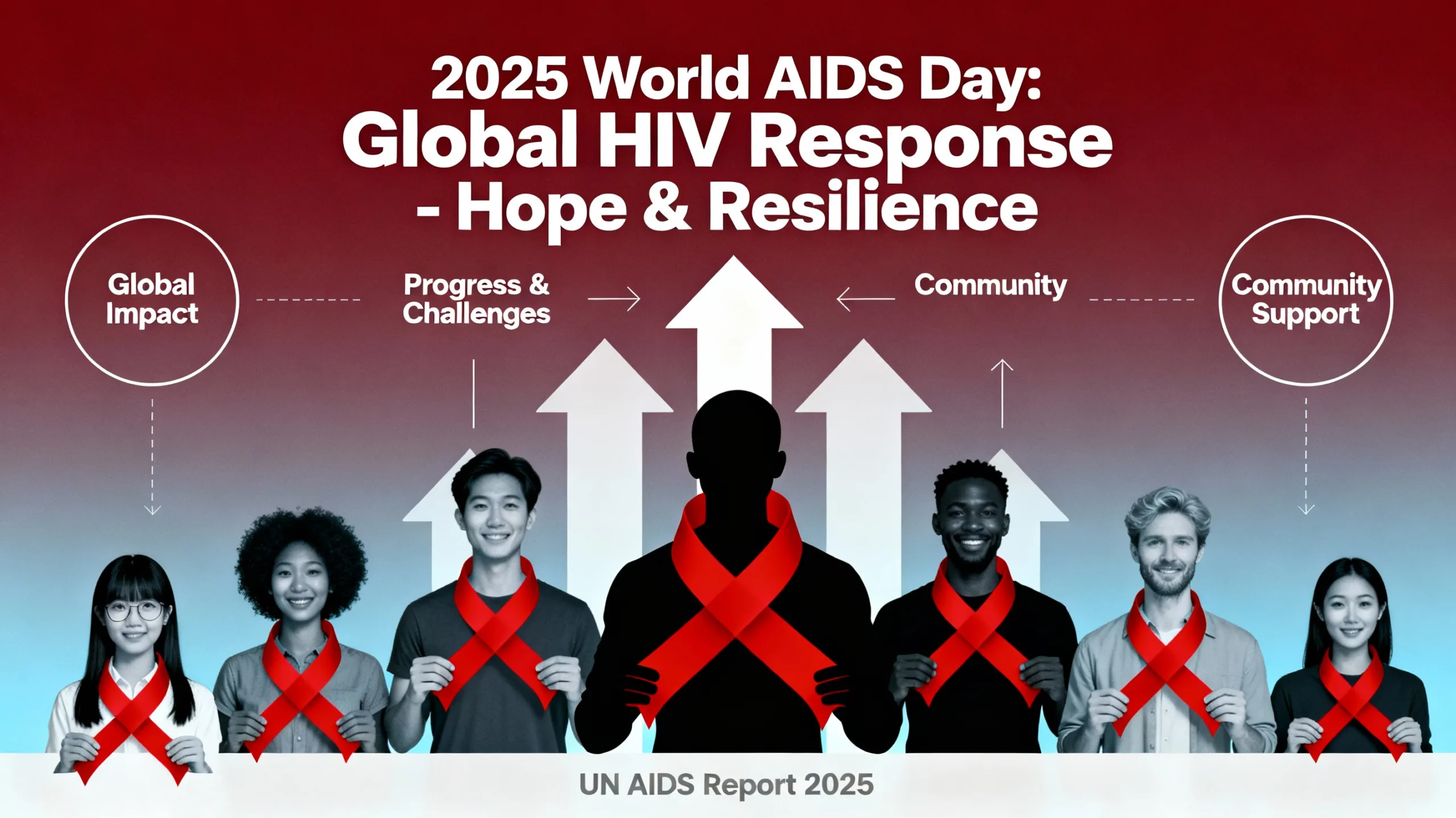
World AIDS Day 2025 highlights a global funding crisis in HIV response — but renewed commitment, stories of resilience, and new strategies offer hope. Learn what’s next.
Every year on December 1st, the world observes World AIDS Day, a moment to remember lives lost, honour people living with HIV/AIDS, and galvanize global action. In 2025, the stakes feel especially high: mounting funding cuts have jeopardized prevention, treatment, and care services worldwide. Yet the spirit of resilience—driven by international agencies, communities, and individuals—remains strong. This year’s theme, “Overcoming disruption, transforming the AIDS response”, calls for renewed solidarity, innovation, and commitment.
What’s New in 2025: Key Reports & Global Trends
- A recent report by UNAIDS warns the global HIV response faces its most serious disruption in decades. Funding cuts have severely impacted HIV prevention, community-led services, testing, and treatment access—particularly affecting low- and middle-income countries already bearing the highest burden.
- Despite challenges, many countries report progress: Some regions have seen declines in new HIV infections and improved access to antiretroviral therapy (ART), thanks to focused public health campaigns and community outreach.
- Global health agencies are calling for a reinvigorated response—urging political leaders, private sector partners, and civil society to step up. The message: ending AIDS by 2030 is still achievable, but only with collective action.
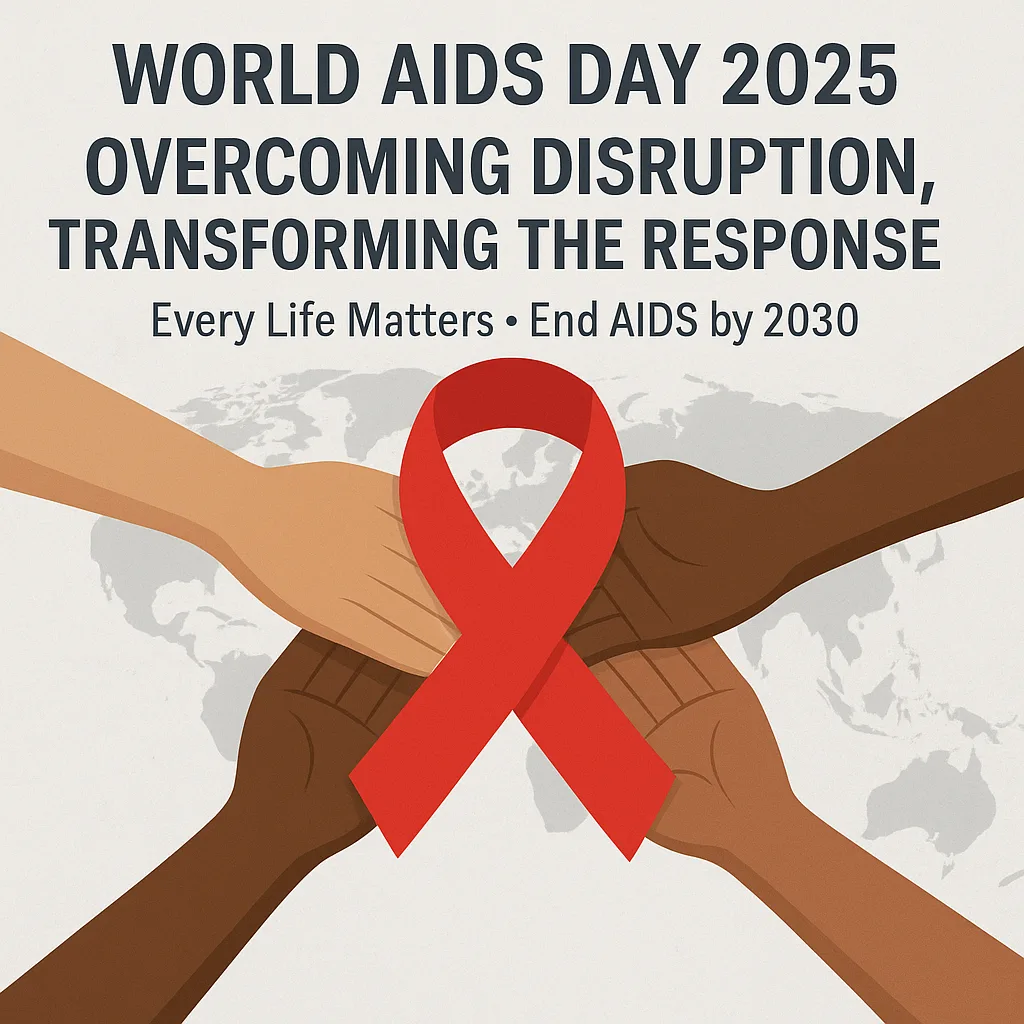
Why World AIDS Day 2025 Matters More Than Ever
💔 Impact of Funding Crunch
The funding shortages and service disruptions threaten to erode years of hard-earned gains. Interruptions in prevention programs, HIV testing, and community support risk reversing progress—especially among vulnerable populations and children. UNICEF-affiliated modelling warns that reduced programme coverage could lead to millions more new infections and AIDS-related deaths by 2040. UNICEF
🧑🤝🧑 Communities & Resilience
Despite adversity, community-led initiatives, grassroots activism, and local support networks continue to play a crucial role. From awareness campaigns to treatment support, NGOs and civil-society groups remain the backbone of the global AIDS response. Many emphasize that every life matters, and every effort counts.
📢 Renewed Calls for Rights, Equity & Solidarity
This year’s theme underlines the need for a human-rights centred approach: equitable access to testing and treatment, elimination of stigma and discrimination, protection of vulnerable communities, and inclusive health policies.
What’s at Stake: Risks & Opportunities
| Risk/Challenge | Why It Matters |
|---|---|
| Service disruption & funding gaps | Reduced access to HIV testing, ART, and prevention tools may cause spikes in new infections and AIDS-related deaths. |
| Stigma & misinformation | Social stigma still discourages many from seeking testing or treatment—particularly in rural or marginalized communities. |
| Policy & political will fatigue | Without sustained global commitment and funding, long-term goals (like ending AIDS by 2030) become harder to realise. |
| Renewed innovation & solidarity | Advances in treatment, early detection technology, community engagement, and public-private partnership offer renewed hope. |
What Can Individuals & Communities Do in 2025
- Get tested regularly — Early detection remains key. Encourage friends and family to test.
- Support local awareness campaigns — Share credible info; challenge myths; reduce stigma.
- Advocate for rights and equitable access — Push for policies ensuring affordable treatment and care for all.
- Support community-led efforts — NGOs, peer-support groups, and grassroots organisations make a real difference on the ground.
- Stay informed & demand transparency — Follow reputable sources and support global efforts to restore funding and strengthen health systems.
Disclaimer
This article is intended for informational and awareness purposes only. The facts, statistics, and developments discussed here are based on publicly available reports and news updates at the time of writing. Medical information related to HIV/AIDS should not be treated as professional medical advice. For diagnosis, treatment, or health-related decisions, please consult qualified healthcare professionals or authorised public-health institutions. The author and publisher are not responsible for any errors, omissions, or outcomes resulting from the use of the information provided. For official updates, readers should refer to UNAIDS, WHO, and national health authorities.
















1 Comment
[…] Also Read: World AIDS Day 2025: Urgent Call to “Overcoming Disruption, Transforming the AIDS Respo… […]