
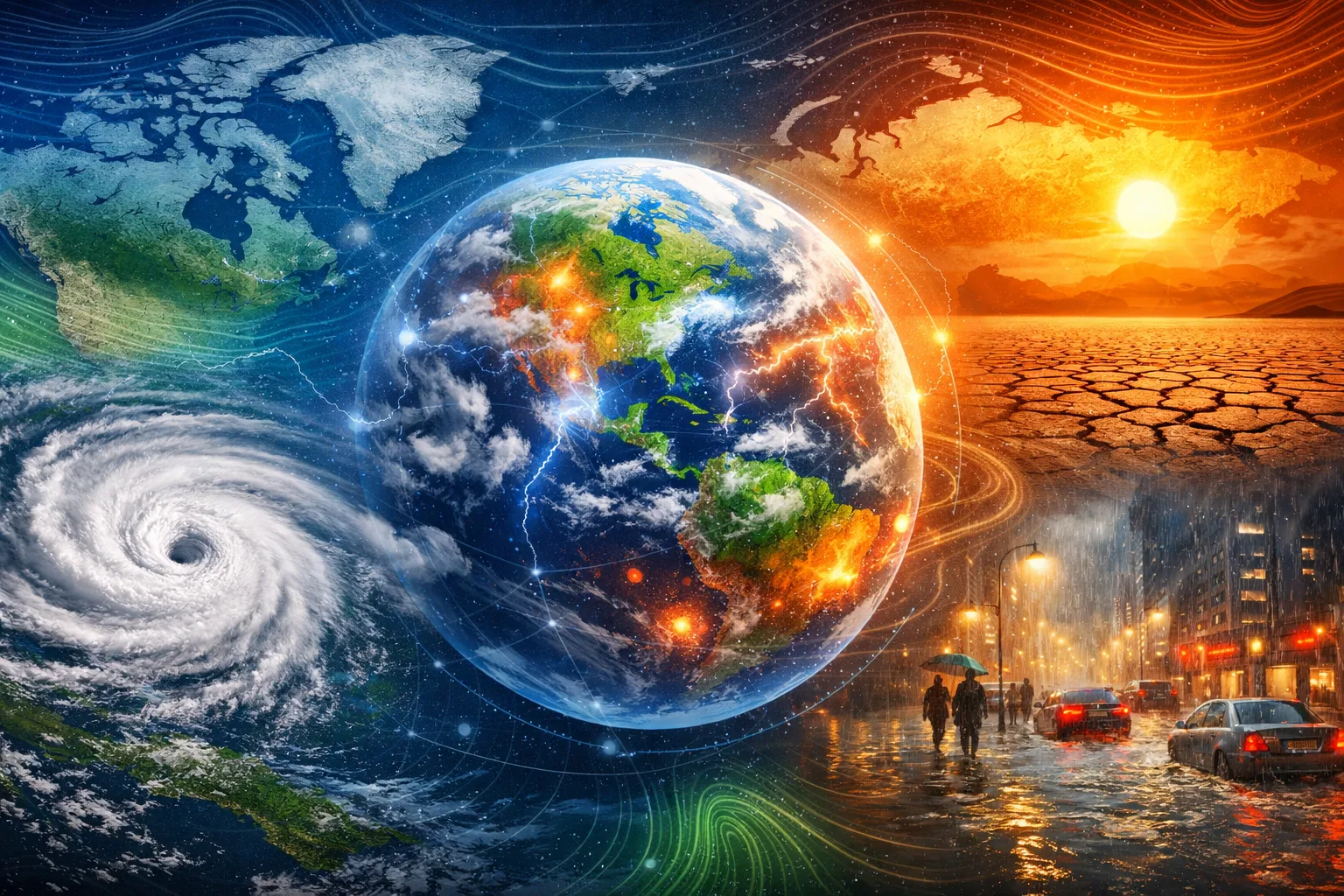
Explore the latest analysis of the Weather of the World, including global climate trends, extreme weather events, El Niño forecasts, and how changing climate patterns are shaping the planet.
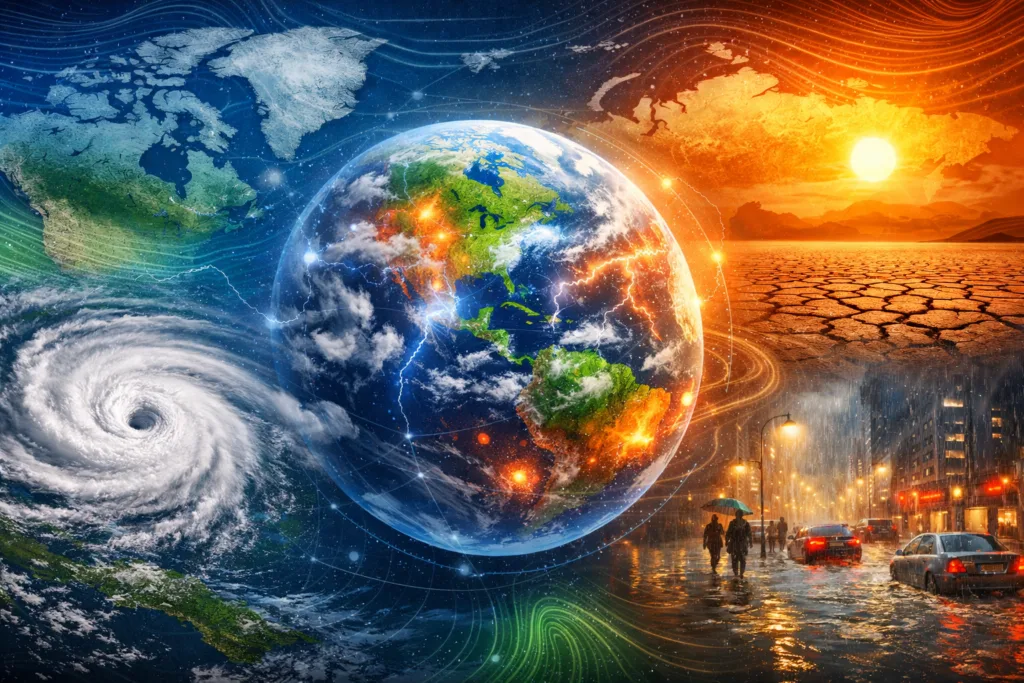
Weather of the World: Understanding Global Climate Patterns in 2026
The Weather of the World is becoming more unpredictable and intense as climate systems shift. From record heat waves and violent storms to emerging El Niño conditions, the planet is experiencing a new era of weather variability. Scientists and meteorological agencies warn that extreme weather events are becoming more frequent, affecting ecosystems, economies, and human life worldwide.
This analytical report examines the current state of global weather, recent extreme events, and the climate mechanisms shaping weather patterns across continents.
Weather of the World
The Weather of the World refers to the collective atmospheric conditions across Earth, driven by interactions among oceans, land surfaces, and atmospheric circulation.
Key global drivers include:
- Ocean–atmosphere systems such as El Niño and La Niña
- Jet stream movements and polar circulation
- Solar radiation and greenhouse gas concentrations
- Regional geographic influences
Recent climate reports indicate that global temperatures remain historically high, with the climate system operating near record levels.
In 2025, global average temperatures reached one of the highest levels ever recorded, demonstrating the continued warming trend affecting worldwide weather patterns.
Global Weather Highlights: Major Trends in 2025–2026
1. Rising Global Temperatures
Climate monitoring agencies report that January 2026 was among the five warmest Januaries ever recorded globally.
This warming contributes to:
- Longer heatwaves
- Higher ocean temperatures
- More intense rainfall events
Extreme heat events across continents have become increasingly common, affecting agriculture and water resources.
2. Increasing Extreme Weather Events
Extreme weather now ranks among the most severe long-term global risks, according to international climate risk assessments.
Examples of recent events include:
- Severe storms across Europe causing billions in damages
- Massive heatwaves in Asia and Europe
- Floods and drought cycles across multiple continents
For instance, the 2025 India–Pakistan heat wave pushed temperatures close to 48°C, placing hundreds of millions under extreme thermal stress.
Similarly, Europe experienced record-breaking summer heatwaves in 2025 with tens of thousands of heat-related fatalities.
3. Violent Storm Systems and Ocean Impacts
Large storm systems continue to shape global weather patterns.
One notable example is Storm Kristin, which struck parts of Europe in early 2026 with severe winds and damages exceeding billions of euros.
Additionally, powerful ocean storms have generated waves as high as six meters near Atlantic islands, illustrating the increasing energy within oceanic weather systems.
These storms disrupt transportation, infrastructure, and coastal ecosystems worldwide.
The Emerging El Niño Factor
A major factor influencing the Weather of the World in 2026 is the potential return of El Niño.
Climate forecasters expect:
- The fading of the La Niña phase
- Transition to neutral conditions
- Possible El Niño development later in 2026
Forecast models estimate over a 60% chance of El Niño forming by mid-2026, potentially persisting through the end of the year.
Some climate scientists even warn that the upcoming event could become a strong or “super” El Niño, which typically raises global temperatures and intensifies storms and droughts in different regions.
How Global Weather Affects Different Regions
Asia
Asia faces increasingly intense heatwaves and monsoon variability. Early summer heat waves across South Asia highlight the vulnerability of densely populated regions.
Europe
Europe is seeing stronger storms, hotter summers, and significant winter temperature anomalies.
North America
Recent winters have shown sharp contrasts — extreme cold waves in the north and record warmth in southern regions.
Polar Regions
The Arctic continues to warm faster than the global average, altering jet streams and influencing weather patterns worldwide.
Climate Change and the Future of Global Weather
Climate scientists warn that the frequency and intensity of extreme weather events will likely increase throughout the 21st century.
Key projections include:
- More frequent heatwaves
- Stronger hurricanes and storms
- Increased flooding and drought cycles
- Greater unpredictability in seasonal weather patterns
These changes may affect food production, global infrastructure, and economic stability if adaptation measures are not implemented.
Why Monitoring the Weather of the World Matters
Understanding global weather patterns helps governments and scientists:
- Predict disasters earlier
- Prepare agriculture and water systems
- Improve climate adaptation strategies
- Protect vulnerable populations
Global meteorological cooperation and satellite monitoring now play critical roles in tracking the evolving climate system.
Conclusion
The Weather of the World in 2026 reflects a planet undergoing rapid climate transformation. Rising temperatures, extreme storms, and shifting ocean cycles such as El Niño are reshaping global weather dynamics.
While meteorological science continues to improve forecasting abilities, the growing volatility of global weather highlights the urgent need for climate resilience and sustainable environmental policies.
Understanding these patterns is no longer just a scientific priority — it is essential for global survival and economic stability.
Disclaimer: The information presented in this article is for general informational and educational purposes only. While efforts have been made to ensure accuracy, weather conditions and climate data are subject to change and may vary by region and time. Readers are encouraged to consult official meteorological agencies and authoritative climate organizations for the most current and location-specific weather updates. The content does not constitute professional environmental, scientific, or policy advice.
Weather of the World: Global Climate Extremes, El Niño Signals, and the Future of Planetary Weather

Explore the latest analysis of the Weather of the World, including global climate trends, extreme weather events, El Niño forecasts, and how changing climate patterns are shaping the planet. SAMSUNG TV 2026: How Samsung’s AI-Powered Displays and Micro RGB Technology Are Reshaping the Global TV Market Weather of the World: Understanding Global Climate Patterns in…
SAMSUNG TV 2026: How Samsung’s AI-Powered Displays and Micro RGB Technology Are Reshaping the Global TV Market
Samsung TV technology is evolving rapidly in 2026 with AI-powered displays, Micro RGB screens, and advanced OLED gaming features. Explore the latest Samsung TV innovations, models, and market impact. Racing Bicycles in 2026: Technology, Aerodynamics, and the Future of Professional Cycling SAMSUNG TV: The Technology Powerhouse Leading the Future of Smart Televisions The global television…
Racing Bicycles in 2026: Technology, Aerodynamics, and the Future of Professional Cycling
Discover the latest developments in Racing bicycles, including new bike launches, UCI regulations, aerodynamic innovations, and technology trends shaping professional cycling in 2026. Race Bikes in 2026: How MotoGP Technology Is Redefining High-Performance Motorcycles Racing Bicycles: How Technology Is Transforming Professional Cycling in 2026 Racing bicycles are among the most advanced machines in the cycling…








Join Us on Social Media!
Stay updated with the latest from EasyBuzz. Connect with us: