
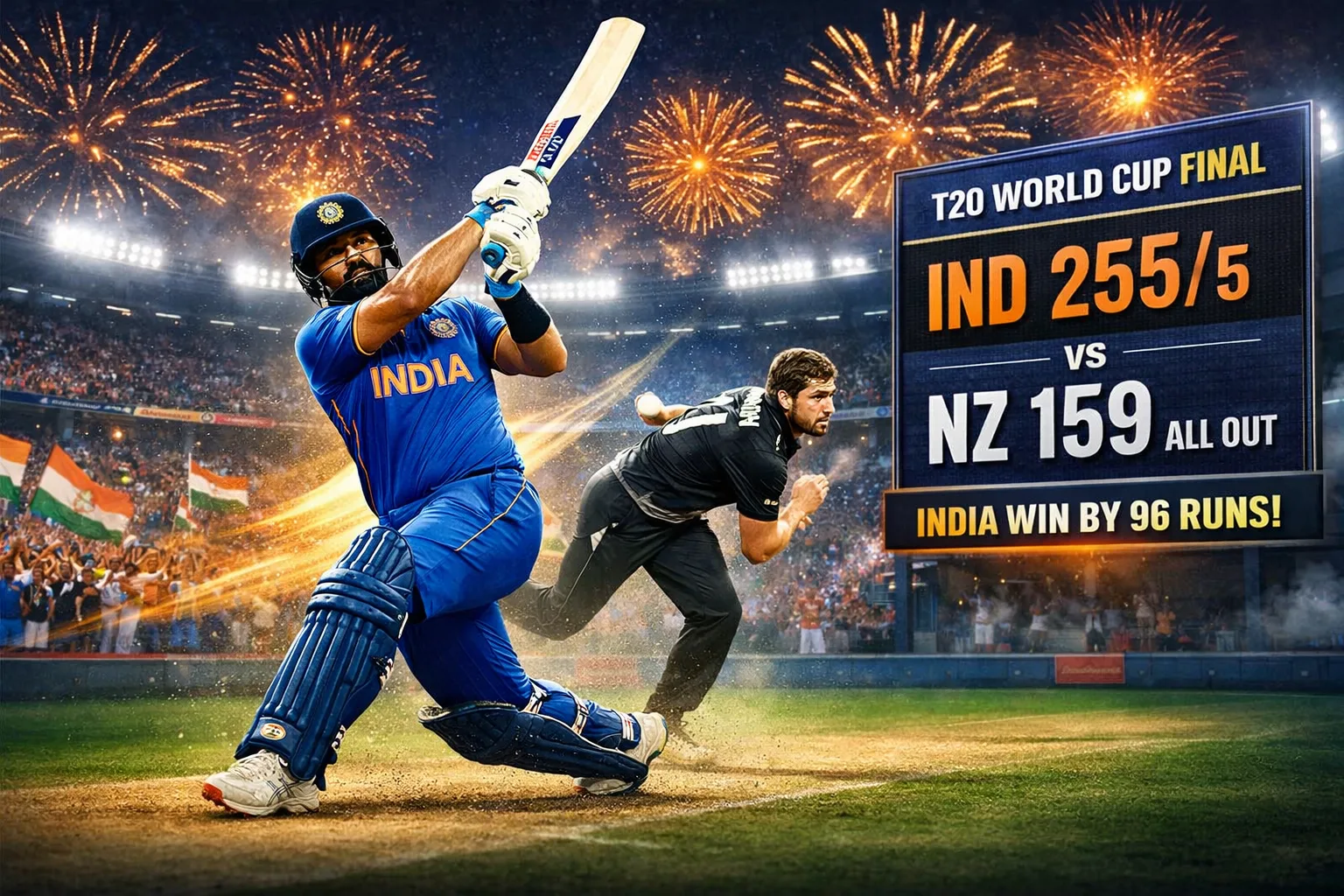
India vs New Zealand T20 World Cup 2026 Final analysis: India crush New Zealand by 96 runs in a historic victory. Full match breakdown, tactical insights, and what this means for global cricket.
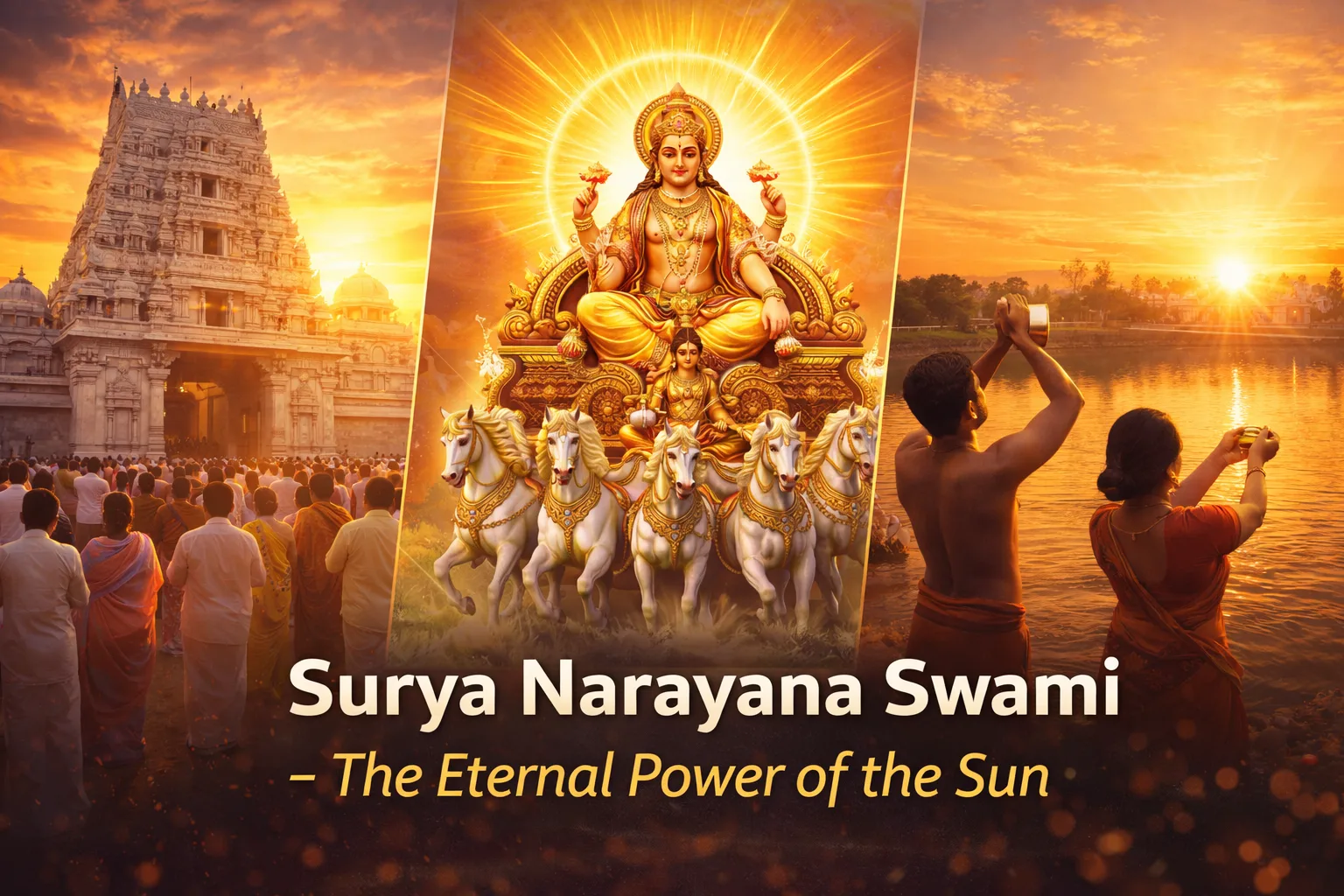
Surya Narayana Swami: Ancient Sun Temple Traditions and the Rising Devotional Wave in 2026
India vs New Zealand: Tactical Brilliance and Power-Hitting Crown India T20 World Cup 2026 Champions
The India vs New Zealand clash in the ICC Men’s T20 World Cup 2026 final delivered a historic moment for international cricket. India produced a dominant performance, defeating New Zealand by 96 runs to claim the T20 World Cup title and further cement their status as one of the most formidable teams in modern T20 cricket.
Played at the Narendra Modi Stadium in Ahmedabad, the final showcased India’s aggressive batting philosophy, clinical bowling attack, and tactical clarity under pressure. The win marked another milestone in India’s T20 legacy and highlighted the widening gap between India’s modern power-hitting style and traditional defensive approaches.
Match Overview: India vs New Zealand Final Scorecard
| Team | Score |
|---|---|
| India | 255/5 (20 overs) |
| New Zealand | 159 all out (19 overs) |
| Result | India won by 96 runs |
India’s massive 255-run total was one of the highest scores ever recorded in a T20 World Cup final, putting immense pressure on New Zealand’s batting lineup.
First Innings Analysis: India’s Explosive Batting Sets the Tone
India’s batting lineup delivered an aggressive display from the very beginning. The opening partnership quickly accelerated during the powerplay, allowing India to dominate the run rate early in the innings.
Key highlights from the innings:
- Sanju Samson produced a match-defining knock of 89 runs, anchoring India’s innings.
- India smashed 19 fours and 18 sixes, demonstrating their aggressive boundary-hitting approach.
- The team finished strongly, scoring heavily in the final overs to reach 255/5.
India’s batting strategy focused on relentless attacking cricket—targeting the powerplay overs and exploiting the shorter boundaries in Ahmedabad.
From an analytical perspective, this innings demonstrated three modern T20 principles:
- Powerplay domination
- Middle-over acceleration
- Death-over boundary surge
New Zealand’s Chase: Early Wickets Destroy the Momentum
Chasing a massive target of 256 runs, New Zealand faced early setbacks. India’s bowlers quickly dismantled the Kiwi top order, ensuring the required run rate became nearly impossible.
Important bowling moments included:
- Early breakthroughs in the powerplay that reduced New Zealand to a fragile position.
- A disciplined bowling performance led by India’s pace and spin attack.
- Continuous pressure that prevented any major partnership.
New Zealand were eventually bowled out for 159 in 19 overs, handing India a commanding victory margin.
Tactical Turning Points in the India vs New Zealand Final
1. Powerplay Dominance
India’s aggressive start allowed them to build momentum immediately. The opening pair ensured New Zealand never gained control during the early overs.
2. Boundary-Heavy Strategy
Scoring nearly 184 runs in boundaries showed India’s commitment to high-risk, high-reward cricket.
3. Early Bowling Breakthroughs
India’s bowlers dismantled New Zealand’s chase within the powerplay, eliminating the possibility of a steady run chase.
Key Performers
Sanju Samson
- 89 runs in the final
- Anchored India’s innings
- Played aggressive yet controlled cricket
Jasprit Bumrah
- Delivered crucial breakthroughs
- Maintained pressure in middle overs
Axar Patel
- Key wicket in the powerplay
- Provided control and breakthroughs in the middle overs
India vs New Zealand Rivalry: A Growing Cricket Classic
The India vs New Zealand rivalry has intensified in recent years across all formats. Historically, New Zealand often challenged India in ICC tournaments, but India’s recent dominance indicates a strategic evolution in their white-ball approach.
Key characteristics of the rivalry:
- Tactical discipline from New Zealand
- High-intensity batting from India
- Balanced contests in ICC tournaments
However, the 2026 final suggested a shift in momentum toward India’s modern attacking style.
What This Victory Means for World Cricket
India’s triumph carries several broader implications:
1. The Rise of Ultra-Aggressive T20 Cricket
Teams are now prioritizing explosive batting throughout the innings rather than conservative accumulation.
2. India’s Talent Pipeline
India continues to produce world-class players capable of thriving in high-pressure ICC finals.
3. Tactical Evolution in T20 Formats
Modern T20 cricket emphasizes analytics-driven strategies, aggressive matchups, and optimized batting orders.
Expert Insight: Why India’s Strategy Worked
India’s victory was not just about talent—it was about data-driven strategy.
Analytical factors behind their success included:
- Optimized batting order flexibility
- Matchup-based bowling changes
- Boundary-focused batting strategy
The combination of these elements created a near-perfect performance on the world stage.
Conclusion
The India vs New Zealand T20 World Cup 2026 final will be remembered as one of the most dominant performances in ICC finals history. India’s explosive batting, disciplined bowling, and strategic clarity produced a comprehensive 96-run victory.
Beyond the trophy, the match signaled a shift in global T20 cricket—where aggressive batting, analytics-driven tactics, and fearless cricket define champions.
If the trends continue, India could remain the benchmark for T20 excellence in the years ahead.
Disclaimer : The information presented in this article is intended for informational and educational purposes only. While efforts have been made to ensure accuracy and reliability, match statistics, player performances, and event details may change based on official updates or corrections from governing cricket authorities. Readers are encouraged to verify key information through official cricket boards, tournament organizers, or recognized sports news platforms. This content does not claim ownership of any team logos, trademarks, or broadcast visuals referenced in the discussion. All such intellectual property belongs to their respective owners. The feature image used in this article is a conceptual illustration created for editorial and storytelling purposes and may not represent actual match footage. The views expressed in this analysis are based on publicly available information and general sports journalism insights and should not be interpreted as official statements from any cricket organization, team, or governing body.
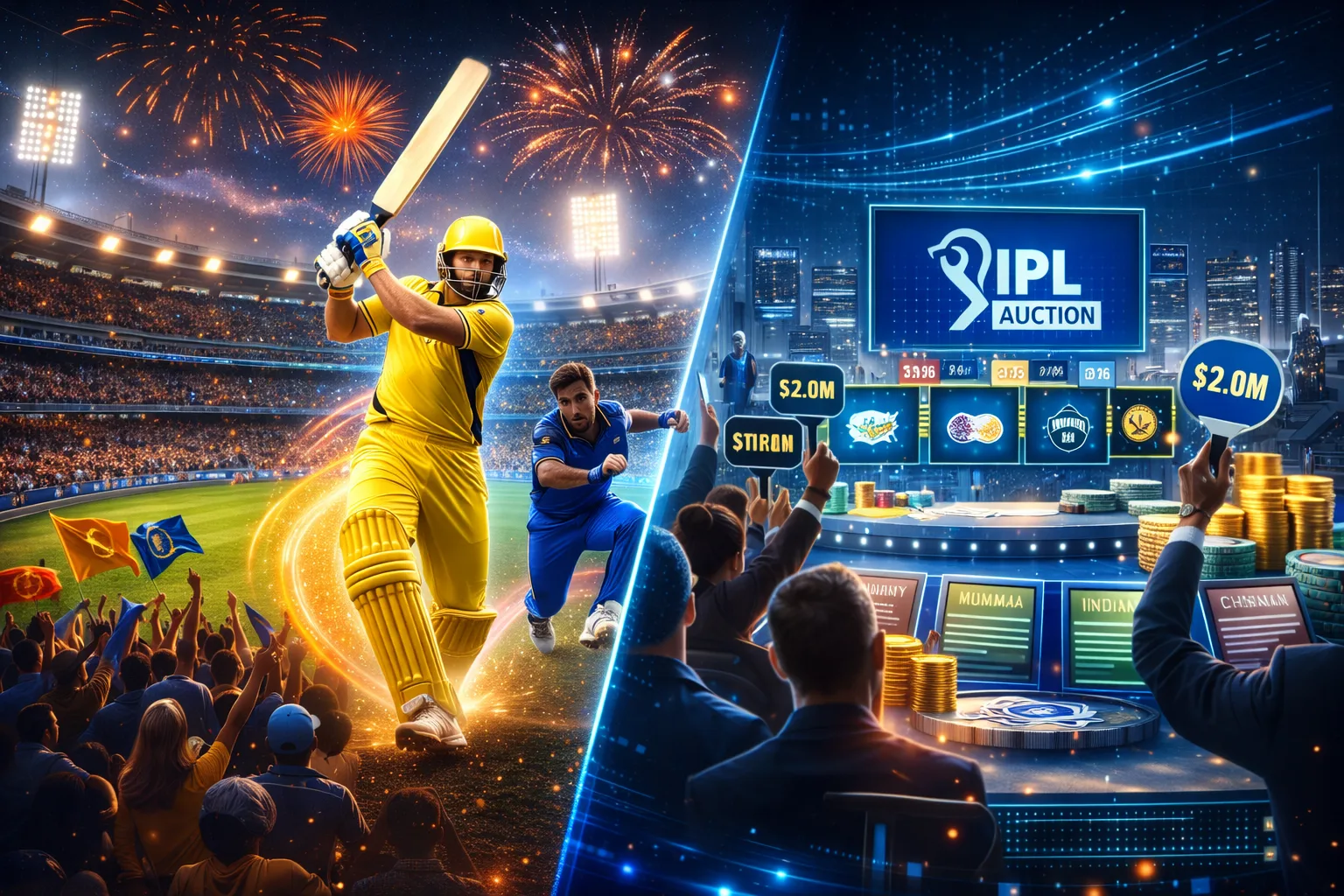
IPL 2026: Inside the Billion-Dollar Cricket Empire Reshaping Global T20 Leagues

The IPL continues to dominate global cricket with record franchise valuations, major auction deals, and the upcoming 2026 season. Explore the latest IPL news, auction highlights, schedule insights, and the league’s growing financial power. Creta at the Crossroads: How Hyundai’s Best-Selling SUV Is Preparing for an Electric and Hybrid Future IPL: The Global Cricket Powerhouse…
Creta at the Crossroads: How Hyundai’s Best-Selling SUV Is Preparing for an Electric and Hybrid Future
The Creta remains one of India’s best-selling SUVs, but new electric rivals, hybrid technology, and next-generation upgrades are reshaping its future. Explore the latest Creta news, sales trends, EV updates, and upcoming next-gen model insights. India vs New Zealand: India’s 96-Run World Cup Masterclass Signals a New Era of Aggressive T20 Dominance Creta: India’s Mid-Size…
India vs New Zealand: India’s 96-Run World Cup Masterclass Signals a New Era of Aggressive T20 Dominance
India vs New Zealand T20 World Cup 2026 Final analysis: India crush New Zealand by 96 runs in a historic victory. Full match breakdown, tactical insights, and what this means for global cricket. Surya Narayana Swami: Ancient Sun Temple Traditions and the Rising Devotional Wave in 2026 India vs New Zealand: Tactical Brilliance and Power-Hitting…






Join Us on Social Media!
Stay updated with the latest from EasyBuzz. Connect with us: