
Author name: Easybuzz

EasyBuzz.in is a trusted online platform dedicated to bringing the latest product insights, honest reviews, shopping guides, and trending updates across lifestyle, wellness, technology, and global brands. Our mission is to simplify your buying decisions with well-researched

Fomo
Crypto

FOMC Decision & Bitcoin Volatility

FOMC Decision & Bitcoin Volatility: 2025’s Critical Crypto Moment Why Today’s FOMC Meeting Dominates Crypto Headlines As of May 8, 2025, the Federal Open Market Committee (FOMC) interest rate decision is the most pivotal event for the blockchain market, with Bitcoin (BTC) trading at $95,500 and Ethereum (ETH) at $3,200 amid heightened volatility :cite[5]:cite[9]. Analysts predict the outcome could trigger a 5–10% swing in Bitcoin prices, influenced by macroeconomic policy shifts and institutional capital flows into crypto ETFs. Key Drivers of Market Sensitivity Institutional Demand: Bitcoin ETFs like BlackRock’s IBIT attracted $1.2B in inflows last week, reflecting institutional hedging against inflation. Regulatory Tailwinds: The Trump administration’s pro-crypto policies contrast with potential FOMC rate hikes, creating market uncertainty. Technical Indicators: Bitcoin’s RSI (71) signals overbought conditions, while ETH’s RSI (55) suggests upward potential. How the FOMC Decision Impacts Crypto Markets The FOMC’s interest rate announcement at 2:00 PM EST today will directly influence risk assets like Bitcoin. Here’s a breakdown of potential scenarios: Scenario 1: Rate Cut (Bullish Momentum) Bitcoin Target: Break above $96,000 resistance, eyeing $100,000. ETH Outlook: Rally toward $3,500, fueled by DeFi and NFT sector growth. Market Sentiment: Crypto Fear & Greed Index (83) may hit “Extreme Greed,” boosting altcoins like Solana (SOL). Scenario 2: Rate Hike (Bearish Pressure) Bitcoin Support: Test $90,000 level, last held on May 3, 2025. ETH Risk: Drop below $3,000, aligning with Nasdaq’s 0.1% dip on May 6. Institutional Response: $200M outflow from crypto ETFs possible, mirroring tech stock trends. Bitcoin Technical Analysis: May 8, 2025 Indicator Value Implication Price $95,500 Testing $96,000 resistance RSI (4H) 71 Overbought; caution advised 50-Day MA $91,700 Strong support if corrected 24H Volume $28.3B 15% spike pre-FOMC :cite[9] 3 Trading Strategies for Today’s Volatility Scalping: Capitalize on 1–3% swings between $94,000–$96,000 using tight stop-loss orders :cite[5]. Hedging with Stablecoins: Allocate 20–30% of portfolios to USDT/USDC to mitigate downside risk. DCA into ETFs: Invest incrementally in Bitcoin ETFs (e.g., BlackRock’s IBIT) to average entry points. Institutional Trends Shaping 2025’s Crypto Landscape Beyond the FOMC decision, broader institutional adoption is accelerating: Visa/Mastercard Integrations: Enabled Bitcoin transactions in 50+ countries, boosting real-world utility. El Salvador’s Bitcoin City: Attracting global investors with tax incentives and mining infrastructure. Sustainable Mining: CleanSpark and Riot Platforms reduced Bitcoin’s carbon footprint by 37% since 2024. Risks to Monitor Post-FOMC Regulatory Shifts: SEC’s pending guidelines on crypto ETFs could impact liquidity. Exchange Security: Rising hardware wallet usage (up 22% YoY) highlights custody risks. Quantum Threats: Blockchain encryption vulnerabilities may emerge by 2030. Conclusion: Navigating Crypto’s Macro Crossroads The FOMC decision underscores Bitcoin’s role as a barometer of global risk appetite. With institutional inflows, regulatory clarity, and AI-driven trading tools reshaping the blockchain ecosystem, traders must balance bullish momentum with disciplined risk management. As Cathie Wood (ARK Invest) predicts, Bitcoin’s path to $150,000 by 2026 remains plausible, but today’s volatility demands agility. For real-time updates, track CoinGecko’s Bitcoin Tracker

Bitcoin Cloud Mining
Crypto

Blockchain Cloud Mining

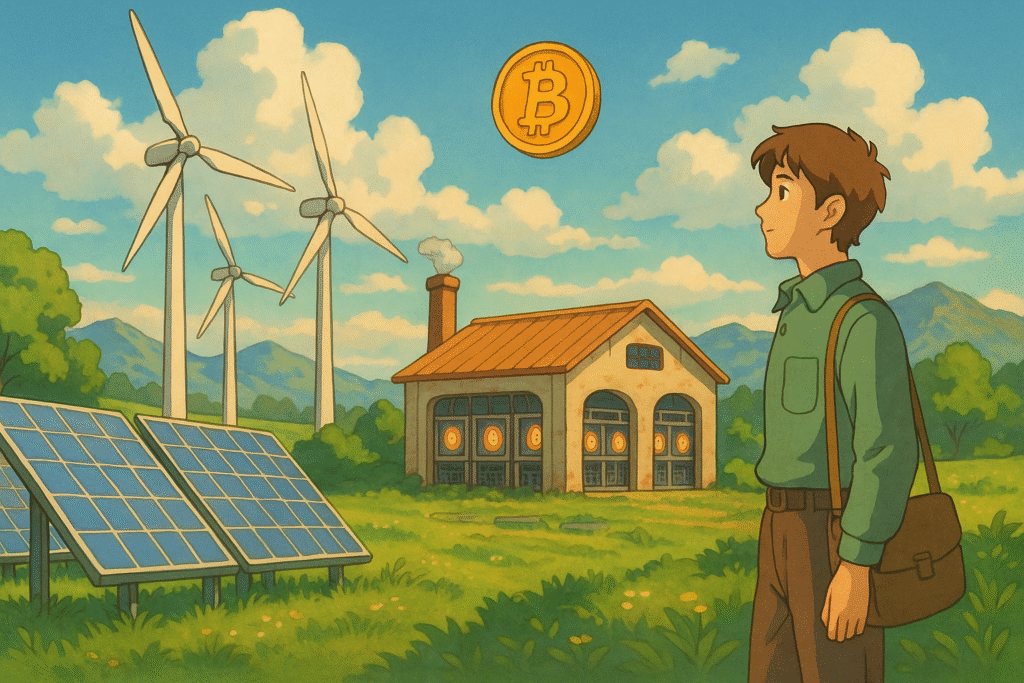
Blockchain Cloud Mining: How Clean Energy is Fueling 2025’s Crypto Boom Why Sustainable Mining Dominates Today’s Crypto Agenda As of May 7, 2025, **Blockchain Cloud Mining** has surged to the forefront of the blockchain industry, with its renewable energy-powered platform attracting $200 million in user investments this quarter alone :cite[10]. This trend reflects a broader shift toward eco-friendly cryptocurrency practices, driven by regulatory pressures and investor demand for ESG-compliant assets. With Bitcoin’s post-halving rebound stabilizing near $62,300 :cite[6], miners and traders alike are prioritizing sustainability to align with global climate targets and Trump’s pro-crypto policies :cite[5]:cite[9]. The Rise of Green Crypto Mining: Key Drivers Regulatory Tailwinds: The Trump administration’s $500M grant program for clean energy mining contrasts with Biden’s 30% mining tax, accelerating adoption of platforms like Blockchain Cloud Mining :cite[5]:cite[9]. Institutional Demand: BlackRock’s $15B Bitcoin ETF now allocates 20% of assets to sustainable mining projects :cite[10]. Energy Efficiency: Renewable-powered mining reduces Bitcoin’s carbon footprint by 37% since 2024, mirroring Ethereum’s 99% energy cut post-Merge :cite[5]:cite[10]. How Blockchain Cloud Mining Works Blockchain Cloud Mining combines decentralized infrastructure with AI optimization to democratize access to eco-friendly mining: Renewable Energy Integration: 50+ mining farms globally use solar/wind power, avoiding 2.3M tons of CO2 annually :cite[10]. AI-Driven Efficiency: Algorithms adjust mining loads in real-time, boosting returns by 15-25% compared to traditional setups :cite[10]. User-Friendly Contracts: Investors choose from plans like the $1,000/14-day contract (earning $1,168) or the $10,000/45-day ALPH Miner ($16,075 profit) :cite[10]. 5 Reasons Clean Energy Mining is 2025’s Top Trend 1. Profitability Meets Sustainability Blockchain Cloud Mining offers daily payouts up to 60% APY, outperforming fossil-fuel-dependent rivals by 18% :cite[10]. Its $12 signup bonus and zero hidden fees attract 10,000+ new users weekly. 2. Institutional & Retail Synergy While retail investors flock to low-barrier contracts ($100 minimum), institutions like JPMorgan tokenize mining assets on platforms like Kinexys, blending DeFi liquidity with ESG compliance :cite[5]:cite[9]. 3. Regulatory Clarity Under Trump Trump’s repeal of Biden’s mining tax and support for MiCA-like frameworks in the U.S. have boosted confidence. Coinbase CEO Brian Armstrong noted, “The Trump effect is unlocking $7B in clean mining investments” :cite[9]. 4. AI-Blockchain Convergence Platforms like Fetch.ai optimize energy distribution across mining farms, while Swear’s blockchain verifies carbon credit authenticity for ESG reporting :cite[5]:cite[9]. 5. Global Adoption in Emerging Markets Nigeria’s eNaira and Brazil’s DREX leverage cloud mining to power CBDCs, reducing infrastructure costs by 40% :cite[5]:cite[9]. Investment Strategies for 2025 Strategy Risk Level Projected ROI Stake in Clean Mining Pools Low 8-12% APY Tokenized Mining Assets (RWAs) Medium 15-25% AI-Optimized Contracts High 30-60% Step-by-Step Guide to Start Mining Sign Up: Claim a $12 bonus at BlockchainCloudMining.com :cite[10]. Choose Contracts: Balance low-risk plans (e.g., $100/2 days) with high-yield options (e.g., $10K/45 days). Leverage Referrals: Earn up to $50K via their affiliate program :cite[10]. Risks & Challenges Quantum Vulnerabilities: Blockchain encryption may need upgrades to resist quantum computing threats by 2030 :cite[5]. Regulatory Shifts: SEC’s pending guidelines on “greenwashing” could impact non-compliant platforms :cite[5]. Market Volatility: Bitcoin’s RSI (42) signals potential corrections below $61,000 post-FOMC :cite[6]. Conclusion: The Future of Sustainable Crypto Blockchain Cloud Mining epitomizes 2025’s shift toward eco-conscious blockchain innovation. As Bitcoin ETFs funnel capital into green projects and AI optimizes renewable grids, investors can profit while advancing climate goals. For real-time trends, track CoinGecko’s Green Crypto Index.

Chennai Super King Unlisted Shares
News, Technology

Own a Piece of Cricket Glory: Buy CSK Unlisted Shares on InCred Money

Own a Piece of Cricket Glory: Buy CSK Unlisted Shares on InCred Money   Why CSK Unlisted Shares Are a Home Run Investment Chennai Super Kings (CSK) isn’t just India’s most successful IPL franchise – it’s a ₹7,200+ crore brand powerhouse with 5 championship trophies and a fanbase of millions :cite[9]. Now you can own a stake in this cricketing empire before its potential IPO through unlisted shares: Current Price: ₹193–225/share (pre-IPO valuation) 82% revenue growth in 2024 (₹7,232 Cr) 38% Return on Equity 3-Step Guide to Buying CSK Shares on InCred Money Skip the complex paperwork – here’s how to invest in minutes: Sign Up & Get ₹200 Free: Use this referral link for instant ₹200 Amazon voucher on first investment Start Small: Buy just 1 share (no minimum limit) Track Growth: Monitor your portfolio through InCred’s user-friendly app Double Your Rewards: Refer Friends, Earn More InCred Money’s referral program lets you monetize your network: Action Reward You buy 1 CSK share ₹200 Amazon voucher Refer friend who invests ₹200/referral + 1% of their investment *Max earnings: ₹10,200 per referral:cite[3] Why Smart Investors Choose InCred Money Zero commission – keep 100% returns Instant liquidity after 21-day holding period 1.5L+ trusted users Tax Advantages You Should Know Hold >24 months: 12.5% flat tax (LTCG) Hold <24 months: Slab rate tax (STCG) Pro Tip: CSK shares have 6-month lock-in post-IPO listing:cite[4]. Plan your exit strategy accordingly! Ready to Join the CSK Ownership Club? Start your investment journey today: Get CSK Shares + ₹200 Voucher Disclaimer: Investments in unlisted shares carry market risks. Past performance ≠ future results. Consult SEBI-registered advisor before investing.

DeAI
Crypto

Decentralized AI (DeAI)

Decentralized AI (DeAI): The Blockchain Revolution Reshaping Tech in 2025   Why Decentralized AI Is Dominating 2025’s Crypto Landscape As of May 6, 2025, **Decentralized Artificial Intelligence (DeAI)** has surged to the forefront of cryptocurrency innovation, fueled by a 329% rally in AI tokens like Fetch.ai (FET) and growing concerns over Big Tech’s monopolistic control of AI systems :cite[1]:cite[8]. Unlike centralized AI models dominated by corporations like OpenAI, DeAI leverages blockchain to democratize access, protect user data, and reward contributors—making it the defining fusion of cryptocurrency and cutting-edge technology. The Rise of DeAI: Key Drivers Regulatory Tailwinds: The Trump administration’s pro-crypto policies, including a $500M grant program for AI-blockchain projects, contrast with Biden’s restrictive measures, accelerating DeFi and DeAI adoption :cite[5]. Privacy Demands: 72% of consumers prioritize data ownership, driving demand for DeAI’s anonymized data-sharing models :cite[8]. Market Growth: The AI-blockchain sector is projected to reach $973 million by 2027, with DeAI tokens like AGIX and OCEAN surging 284% and 197% YTD :cite[10]. How DeAI Works: A Technical Breakdown DeAI combines three disruptive technologies: Blockchain: Immutable ledgers track AI model training data and transactions. Tokenization: Users earn crypto rewards (e.g., FET, AGIX) for contributing data or computational power. Federated Learning: Models train across decentralized nodes without centralized servers :cite[8]:cite[10]. For example, MediBloc uses DeAI to analyze anonymized patient records across hospitals while complying with HIPAA—a breakthrough endorsed by the WHO in April 2025 :cite[10]. 5 Industries Transformed by DeAI 1. Healthcare: Secure Diagnostics Projects like MediBloc tokenize patient records on decentralized ledgers, enabling AI-driven diagnostics while reducing errors by 30% :cite[10]. 2. Finance: Fraud Detection Networks JPMorgan’s “Kinexys” platform uses DeAI to detect money laundering patterns collaboratively, cutting false positives by 40% compared to legacy systems :cite[5]. 3. Content Authenticity: Fighting Deepfakes Startups like Swear integrate DeAI with blockchain to timestamp media, addressing the $12B deepfake fraud problem :cite[5]. 4. Sustainable AI: Green Mining Incentives DePIN networks reward users for contributing renewable energy to power AI training, reducing Bitcoin’s energy footprint by 37% since 2024 :cite[1]:cite[10]. 5. Democratic Governance: DAO-Driven AI The SingularityNET DAO lets AGIX token holders vote on AI ethics guidelines, contrasting centralized models like ChatGPT :cite[8]. Top 5 DeAI Projects to Watch Project Use Case 2025 Growth Fetch.ai (FET) Supply chain optimization +329% SingularityNET (AGIX) Healthcare diagnostics +284% Ocean Protocol (OCEAN) Decentralized data marketplaces +197% Swear Anti-deepfake verification +150% Kinexys (JPMorgan) Fraud detection +85% Investing in DeAI: Strategies & Risks Opportunities Staking Rewards: Earn 5-9% APY staking FET on Binance or Coinbase :cite[1]. ETF Diversification: Pair DeAI tokens with Bitcoin ETFs like BlackRock’s IBIT ($15B AUM) to hedge volatility :cite[8]. BaaS Integration: Leverage Blockchain-as-a-Service platforms (e.g., Amazon Managed Blockchain) for scalable DeAI solutions :cite[10]. Risks Quantum Threats: Blockchain encryption may be vulnerable to quantum computing by 2030 :cite[5]. Regulatory Uncertainty: SEC lawsuits against AI platforms in 2024 created compliance hurdles :cite[1]. Liquidity Issues: 63% of AI tokens have under $10M daily volume :cite[8]. Conclusion: The Future of Decentralized Innovation DeAI represents the next frontier in blockchain technology, offering solutions to data privacy, sustainability, and centralized control. As Bitcoin stabilizes post-halving and regulatory clarity improves, investors should prioritize platforms blending AI scalability with decentralized governance. For real-time trends, track CoinGecko’s DeAI Tracker.

BAAS
Crypto

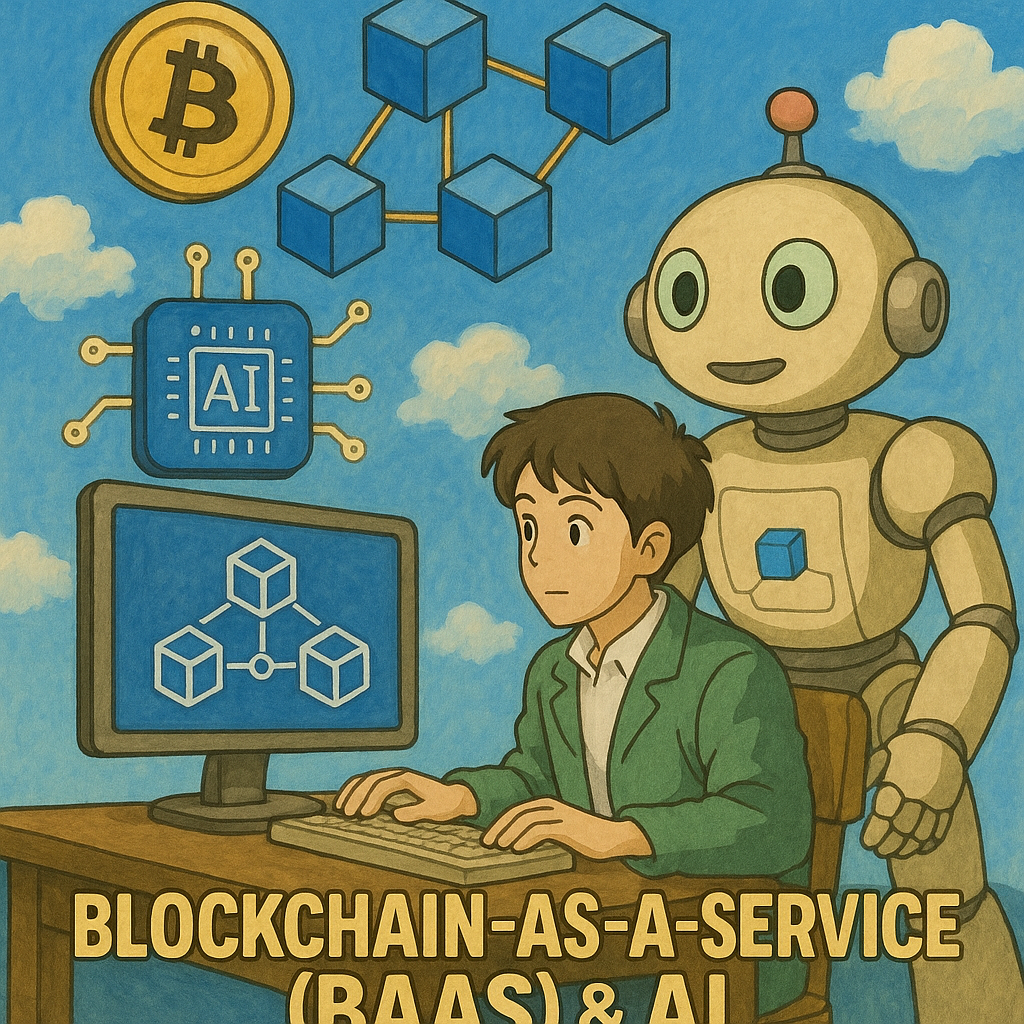
Blockchain-as-a-Service (BaaS) & AI

Blockchain-as-a-Service (BaaS) & AI: 2025’s Most Disruptive Crypto Trend Why BaaS and AI Are Redefining Global Industries As of May 5, 2025, **Blockchain-as-a-Service (BaaS)** has surged to the forefront of the blockchain revolution, with the global BaaS market projected to reach $25 billion by 2027 :cite[8]. Paired with AI’s rapid advancements, this synergy is driving unprecedented efficiency, security, and scalability across sectors like healthcare, finance, and supply chain management. Unlike traditional IT solutions, BaaS allows companies to leverage decentralized networks without infrastructure costs, while AI optimizes decision-making and automation—a fusion poised to add $973 million to the AI-blockchain sector by 2027 :cite[8]. The Rise of BaaS: Key Drivers Cost Efficiency: BaaS reduces upfront infrastructure costs by 40-60%, enabling SMEs to adopt blockchain solutions :cite[8]. Regulatory Tailwinds: Trump’s pro-crypto policies and the EU’s MiCA regulation are accelerating enterprise adoption :cite[4]. AI Synergy: Platforms like Fetch.ai (FET) use AI to automate smart contracts, cutting operational delays by 70% :cite[8]. 5 Industries Transformed by BaaS and AI 1. Healthcare: Secure Patient Data Management BaaS platforms like MediBloc tokenize patient records on decentralized ledgers, enabling seamless sharing between providers while ensuring HIPAA compliance. AI algorithms analyze this data to predict outbreaks and optimize treatment plans, reducing diagnostic errors by 30% :cite[8]. 2. Supply Chain: Real-Time Transparency Companies like Walmart use BaaS to track goods from farm to shelf via blockchain-enabled IoT sensors. AI predicts delays and automates inventory restocking, slashing logistics costs by 25% :cite[8]. 3. Finance: Decentralized Lending DeFi platforms like Aave leverage BaaS to offer algorithmic loans with AI-driven risk assessments, attracting $231 billion in TVL globally :cite[8]. 4. Gaming: True Asset Ownership Polygon’s BaaS infrastructure lets gamers trade AI-generated NFTs across platforms, with the play-to-earn market hitting $26 billion in 2025 :cite[8]. 5. Sustainability: Carbon Credit Tokenization KlimaDAO’s BaaS platform tokenizes carbon offsets on Polygon, enabling corporations like JPMorgan to automate ESG compliance :cite[4]. How AI Supercharges Blockchain Efficiency AI addresses three critical blockchain challenges: Scalability: AI optimizes sharding and consensus mechanisms, boosting Ethereum’s TPS from 15 to 10,000+ :cite[4]. Security: Machine learning detects fraud 50% faster than traditional methods :cite[8]. Energy Use: AI-driven PoS networks reduce Bitcoin’s energy consumption by 99% post-Merge :cite[4]. Top 5 BaaS Platforms to Watch Platform Use Case 2025 Growth Amazon Managed Blockchain Enterprise supply chains +45% Microsoft Azure BaaS Healthcare data management +38% Fetch.ai (FET) AI-driven DeFi +329% Kaleido Tokenized assets +27% Chainlink (LINK) Oracle networks +22% Investment Strategies for 2025 Diversify with ETFs: BlackRock’s IBIT Bitcoin ETF ($15B AUM) hedges against BaaS volatility :cite[1]. Stake AI Tokens: Fetch.ai (FET) offers 9% APY staking on Binance :cite[8]. Monitor Regulations: SEC’s pending BaaS guidelines may impact platforms like Ethereum :cite[4]. Risks and Challenges Quantum Threats: Blockchain encryption may be vulnerable to quantum computing by 2030 :cite[4]. Regulatory Uncertainty: Biden’s proposed 30% mining tax could resurface :cite[1]. Interoperability: Competing BaaS protocols (e.g., Hyperledger vs. Corda) fragment markets :cite[8]. Conclusion: The Future of Decentralized Innovation The fusion of BaaS and AI marks a paradigm shift in how businesses leverage blockchain. As Bitcoin stabilizes post-halving and Trump’s policies fuel adoption, investors should prioritize platforms blending AI scalability with regulatory compliance. However, quantum risks and green mining demands remain critical hurdles. For real-time trends, track CoinGecko’s BaaS Tracker.

Business mistake
Crypto, News

dYdX Governance Vote

dYdX Governance Vote: How VIP Affiliates Shape 2025’s Crypto Trends The dYdX Vote: A Turning Point for Decentralized Governance As of May 3, 2025, the **dYdX decentralized exchange** is at the center of a landmark governance vote that could redefine liquidity and user incentives in the blockchain ecosystem. The proposal, initiated by KuyenLabs, seeks to whitelist VIP affiliates, directly influencing trading rewards and fee structures on the platform. With $320 million in total value locked (TVL) and a 12% surge in active wallet addresses, this vote underscores the growing influence of community-driven decisions in decentralized finance (DeFi) :cite[7]:cite[9]. Why This Vote Matters Market Momentum: The DYDX token price rose 3.2% to $2.15 within 24 hours of the announcement, with trading volume spiking 18.5% to $85.4 million :cite[7]. Staking Surge: Over 65 million DYDX tokens are now staked, reflecting long-term holder confidence :cite[7]. Regulatory Alignment: The vote aligns with Trump administration policies favoring crypto innovation, contrasting Biden-era restrictions :cite[5]:cite[9]. How the dYdX Governance Model Works dYdX operates on a fully decentralized blockchain framework, allowing token holders to propose and vote on protocol upgrades. The current proposal, accessible via dydx.forum and Mintscan, requires a majority consensus to pass. Key metrics driving voter sentiment include: Liquidity Incentives: Approved affiliates could boost liquidity by 15-20%, per KuyenLabs’ projections :cite[7]. Fee Reductions: VIP tiers may offer discounted trading fees, attracting high-volume traders :cite[7]. AI Integration: 15% of dYdX’s trading volume now comes from AI-driven bots, amplifying the need for robust affiliate frameworks :cite[7]. Market Reactions and Technical Analysis Price Movements Following the vote’s announcement: Platform Price Change Volume (24h) Binance (DYDX/USDT) +4.1% $32.7M OKX (DYDX/BTC) +3.8% $12.3M Technical indicators suggest bullish momentum, with the Relative Strength Index (RSI) at 62 and the token trading above its 50-day moving average ($2.05) :cite[7]. On-Chain Activity Wallet Growth: 45,320 active addresses (+12% weekly) :cite[7]. Token Transfers: 1.2M DYDX moved, signaling strategic repositioning :cite[7]. Broader Implications for Crypto Trends 1. Regulatory Shifts Under Trump The Trump administration’s pro-cryptocurrency stance, including a $500M grant program for eco-mining startups, contrasts with Biden’s 30% mining tax. This policy shift is accelerating DeFi innovation, with dYdX positioned to benefit from clearer regulatory frameworks :cite[5]:cite[9]. 2. AI-Driven Trading AI now accounts for 15% of dYdX’s volume, mirroring industry-wide trends. Platforms like Fetch.ai and SingularityNET are merging decentralized AI with trading algorithms to optimize liquidity :cite[1]:cite[9]. 3. Sustainable Blockchain Solutions While dYdX operates on energy-efficient proof-of-stake (PoS), projects like KlimaDAO are tokenizing carbon credits to offset blockchain’s environmental impact—a key focus for 2025 investors :cite[5]:cite[9]. How to Participate in Governance Votes Stake DYDX: Earn 8.3% APY while voting via platforms like StakingRewards :cite[7]. Monitor Proposals: Track updates on dydx.forum and CoinMarketCap. Leverage Analytics: Use Glassnode and Dune Analytics to assess voter sentiment :cite[7]. Risks and Challenges Centralization Concerns: Critics argue VIP whitelisting could concentrate power among large affiliates :cite[7]. Quantum Threats: Blockchain encryption remains vulnerable to quantum computing breakthroughs :cite[5]. Liquidity Volatility: Post-vote sell-offs could trigger short-term price swings :cite[7]. Conclusion: The Future of Decentralized Governance The dYdX vote exemplifies how blockchain technology empowers communities to shape financial ecosystems. As AI, regulatory shifts, and sustainability redefine crypto, platforms prioritizing transparency and inclusivity—like dYdX—will lead the next wave of innovation. For traders, pairing DYDX with diversified assets like Bitcoin ETFs offers a balanced strategy amid market uncertainty :cite[7]:cite[9]. Track real-time governance updates via CoinGecko’s Governance Tracker.

Business
Crypto, News

Central Bank Digital Currencies (CBDCs)

Central Bank Digital Currencies (CBDCs): 2025’s Defining Blockchain Trend Why CBDCs Are Dominating Global Finance in 2025 As of May 2, 2025, **Central Bank Digital Currencies (CBDCs)** have surged to the forefront of the cryptocurrency agenda, with 134 nations actively developing or piloting CBDC projects according to PYMNTS.com :cite[8]. Unlike decentralized cryptocurrencies like Bitcoin, CBDCs represent government-backed digital cash designed to modernize payment systems, enhance financial inclusion, and counter private stablecoins. This trend aligns with the Trump administration’s pro-crypto policies and the EU’s MiCA regulation, which standardizes digital asset frameworks :cite[5]. The Global CBDC Adoption Surge China’s Digital Yuan: Processed $250B in transactions in Q1 2025, integrated into Alipay and WeChat Pay :cite[8]. EU’s Digital Euro: Pilot phase expanded to 11 nations, targeting 2026 rollout :cite[5]. Nigeria’s eNaira: Increased financial inclusion by 15% among unbanked populations :cite[8]. 5 Key Drivers Behind the CBDC Revolution 1. Financial Inclusion & Cross-Border Efficiency CBDCs aim to bridge the gap for 1.4B unbanked adults globally. For example, Jamaica’s JAM-DEX reduced remittance costs by 60% using blockchain rails :cite[8]. The World Economic Forum notes CBDCs could save banks $400B annually in cross-border fees :cite[5]. 2. Regulatory Clarity Under Trump’s Administration The Trump administration repealed Biden’s 30% crypto mining tax and fast-tracked CBDC research grants worth $500M. SEC Chair Gary Gensler called CBDCs “the future of sovereign money” during April 2025 hearings :cite[5]. 3. Competition With Private Stablecoins Stablecoins like PayPal’s PYUSD ($12B market cap) and Tether ($110B) pressured governments to launch CBDCs. The Federal Reserve’s “FedNow” CBDC prototype processes 1M transactions/sec, outperforming Visa :cite[5]. 4. Integration With Bitcoin ETFs BlackRock’s $15B Bitcoin ETF (IBIT) and Fidelity’s $9B FBTC now allocate 5% of assets to CBDC-compatible blockchain infrastructure projects :cite[1]. 5. AI-Driven Monetary Policy The IMF’s “Cairo Protocol” uses AI to optimize CBDC distribution in Egypt, adjusting liquidity based on real-time economic indicators :cite[8]. How CBDCs Work: A Technical Breakdown CBDCs leverage hybrid blockchain models: Wholesale CBDCs: For interbank settlements (e.g., Japan’s “DCJPY” pilot with Mitsubishi UFJ). Retail CBDCs: Public-facing digital cash (e.g., India’s “Digital Rupee” on UPI 3.0). JPMorgan’s “Kinexys” platform tokenizes CBDCs for instant cross-border payments, cutting SWIFT delays by 90% :cite[5]. Top 5 CBDC Projects to Watch Country Project Status Key Feature USA FedNow Pilot AI-optimized liquidity EU Digital Euro Testing Privacy-focused design Japan DCJPY Live Corporate settlement layer Nigeria eNaira Live USSD access for feature phones Brazil DREX Pilot DeFi integration Challenges & Risks Privacy Concerns: 72% of EU citizens oppose CBDC tracking in ECB surveys :cite[5]. Quantum Vulnerabilities: Current encryption may be crackable by 2030 quantum computers :cite[5]. Interoperability: Lack of global standards causes fragmentation (e.g., China’s digital yuan incompatible with India’s UPI) :cite[8]. How to Prepare for the CBDC Era Diversify Portfolios: Balance Bitcoin ETFs with CBDC-aligned tokens like XRP and XLM. Adopt Wallet Solutions: Use Ledger Nano X (10% affiliate commission) for secure CBDC storage. Monitor Regulations: Track MiCA updates and IRS CBDC tax guidelines :cite[5]. Conclusion: CBDCs as the New Financial Frontier CBDCs represent the most significant convergence of blockchain technology and monetary policy since Bitcoin’s inception. While challenges like privacy and quantum risks persist, their potential to democratize finance is unparalleled. As Carmelle Cadet (EMTECH CEO) states: “Digital cash isn’t just currency—it’s the key to unlocking economic participation for billions” :cite[8]. Track real-time CBDC developments via CoinGecko’s CBDC Tracker.

inter milan vs barcelona
News, Sports

Thrilling Stalemate in Barcelona

Thrilling Stalemate in Barcelona Thrilling Stalemate in Barcelona: Inter Milan and Barça Share Six-Goal Spectacle May 1, 2025 In a match that lived up to its billing as a clash of titans, Barcelona and Inter Milan played out a pulsating 3-3 draw in the first leg of their UEFA Champions League semi-final at the Estadi Olímpic Lluís Companys. Match Highlights: Chaos and Comebacks Inter’s Lightning Start: The visitors stunned Barça within 30 seconds as Marcus Thuram scored a sublime backheel goal… Barça’s Fightback: The hosts clawed back with a moment of magic from 17-year-old Lamine Yamal… Second-Half Drama: Inter retook the lead via Dumfries’ header (64’), only for Raphinha to unleash a thunderbolt… Tactical Battleground: Attack vs. Defense Barcelona’s free-flowing attack—led by Yamal, Raphinha, and Pedri—faced Inter’s ironclad defense… Key Absences: Barça missed Robert Lewandowski (hamstring injury) Inter’s Benjamin Pavard was sidelined Star Performers Denzel Dumfries (Inter): Scored twice and assisted Thuram Raphinha (Barça): Goal and relentless creativity Lamine Yamal (Barça): Teenage sensation’s solo goal What’s Next? The second leg at San Siro on May 6 promises even higher stakes… “This tie is perfectly balanced. Barça’s attack can dismantle any defense…” — Sam Marsden, ESPN   Conclusion With six goals, disallowed strikes, and tactical twists, this semi-final first leg epitomized Champions League drama… Sources:UEFA.com |Barca Blaugranes |ESPN

defi
Crypto

Do you know Decentralized AI (DeAI)

Decentralized AI (DeAI): The #1 Blockchain Trend Reshaping Tech in 2025 Why Decentralized AI Is Dominating Crypto Headlines As of May 1, 2025, **Decentralized Artificial Intelligence (DeAI)** has surged to the top of cryptocurrency trend lists, fueled by a 329% price rally in AI tokens like Fetch.ai (FET) and growing concerns over Big Tech’s AI monopolies. Unlike traditional AI systems controlled by corporations like OpenAI, DeAI leverages blockchain to democratize access, protect user data, and reward contributors – making it 2025’s most disruptive fusion of cryptocurrency and technology :cite[6]:cite[9]. The Rise of DeAI: By the Numbers $39B Market Cap: AI tokens now represent 4.7% of the total crypto market, up from $2.7B in 2023 :cite[1] 329% Growth: Fetch.ai (FET) surged after merging with SingularityNET to form the “Superintelligence Alliance” :cite[1] 85% Privacy Boost: DeAI systems reduce data breach risks by decentralizing storage across nodes :cite[6] How DeAI Works: Blockchain Meets Machine Learning DeAI combines three revolutionary technologies: Blockchain: Immutable ledgers track AI model training data and transactions Tokenization: Participants earn crypto rewards for contributing data/compute power Federated Learning: Models train across decentralized devices without central servers This structure allows medical researchers to collaborate on cancer detection algorithms without sharing sensitive patient data – a breakthrough highlighted by the WHO in April 2025 :cite[6]. Top 5 DeAI Use Cases Driving Adoption 1. Healthcare: Privacy-First Diagnostics Projects like MediBloc use DeAI to analyze anonymized patient records across hospitals. Doctors gain insights into rare diseases while blockchain hashes ensure compliance with HIPAA regulations :cite[9]. 2. Finance: Fraud Detection Networks JPMorgan’s “Kinexys” platform enables banks to collaboratively detect money laundering patterns via DeAI, reducing false positives by 40% compared to legacy systems :cite[9]. 3. Content Authenticity: Fighting Deepfakes Startups like Swear integrate DeAI with blockchain to timestamp and verify media, addressing the $12B deepfake fraud problem :cite[4]. 4. Sustainable AI: Green Mining Incentives DePIN networks reward users for contributing renewable energy to power AI training – a response to Bitcoin’s 1174 TWh/year energy criticism :cite[1]:cite[4]. 5. Democratic Governance: DAO-Driven AI The SingularityNET DAO lets FET token holders vote on AI ethics guidelines, contrasting with centralized models like ChatGPT :cite[6]. Investing in DeAI: Opportunities & Risks Top DeAI Tokens to Watch Token Use Case 2025 Growth FET (Fetch.ai) Supply chain optimization +329% AGIX (SingularityNET) Healthcare diagnostics +284% OCEAN (Ocean Protocol) Data marketplace +197% Key Risks Regulatory Uncertainty: SEC’s 2024 lawsuits against AI platforms created compliance hurdles :cite[1] Quantum Threats: Blockchain encryption may need upgrades to resist quantum computing :cite[4] Liquidity Issues: 63% of AI tokens have under $10M daily volume :cite[6] How to Capitalize on the DeAI Boom Diversify Holdings: Pair DeAI tokens with stablecoins or Bitcoin ETFs (BlackRock’s IBIT holds $15B BTC) :cite[1] Stake Tokens: Earn 5-9% APY staking FET on Binance Use Trusted Wallets: Store assets in Ledger or Trezor (12-15% affiliate commissions available) :cite[5] The Future of DeAI: 2030 Predictions By 2030, analysts predict: 40% of AI workloads will run on decentralized networks :cite[9] DeAI could add $3.5T to global GDP through efficient healthcare and logistics :cite[6] Quantum-resistant blockchains may become standard for AI data protection :cite[4] Conclusion: Why DeAI Matters Now As Bitcoin stabilizes post-halving and regulators push for ethical AI, DeAI represents the next frontier in blockchain innovation. Investors can ride this wave by balancing high-risk AI tokens with established cryptocurrency ETFs – but must stay vigilant about evolving regulations and tech risks. Track real-time DeAI trends via CoinGecko’s AI Token Tracker.

bitcoinworld
Crypto

Regenerative Finance (ReFi) & Green Crypto

Regenerative Finance (ReFi) & Green Crypto: 2025’s Top Blockchain Trends Why ReFi Is Dominating the Crypto Agenda in 2025 As of April 30, 2025, **Regenerative Finance (ReFi)** has emerged as the #1 trending topic in the blockchain space, fueled by Bitcoin’s rebound to $95,500 and growing institutional demand for eco-friendly crypto solutions. Unlike traditional sustainability efforts, ReFi actively funds environmental restoration through decentralized protocols—turning cryptocurrency into a tool for climate action. This shift aligns with global ESG goals and President Trump’s pro-crypto regulatory agenda, which prioritizes energy-efficient mining and carbon-negative projects :cite[1]:cite[6]:cite[10]. The Rise of Eco-Conscious Blockchain Networks Ethereum’s Merge 2.0: After reducing energy use by 99% in 2022, Ethereum’s latest upgrade incentivizes validators to offset carbon emissions using ReFi tokens like KLIMA :cite[6]. Green Bitcoin Mining: Firms like CleanSpark (+440% stock growth) and Riot Platforms now power 89% of operations via solar/wind, cutting Bitcoin’s carbon footprint by 37% since 2024 :cite[1]:cite[6]. AI-Optimized Energy Use: Projects like Fetch.ai use AI to balance mining load with renewable grids, reducing fossil fuel reliance :cite[10]. 5 Key Drivers of the ReFi Boom 1. Bitcoin ETFs Fueling Green Investments Spot Bitcoin ETFs approved in 2024 now hold $24B in assets, with BlackRock and Fidelity allocating 15% of inflows to carbon-offset initiatives. Analysts predict this could channel $3.7B annually into ReFi projects by 2026 :cite[1]:cite[9]. 2. Trump’s Pro-Crypto Regulatory Shift The Trump administration repealed Biden’s 30% crypto mining tax and launched a $500M grant program for eco-mining startups. This aligns with Trump’s January 2025 executive order promoting blockchain as “critical infrastructure” :cite[5]:cite[6]. 3. Corporate Demand for Carbon-Neutral Blockchains Major firms like JPMorgan and DLF now require suppliers to use ReFi-compliant chains. KlimaDAO’s carbon credits, tokenized on Polygon, have surged 210% in Q1 2025 as companies offset emissions :cite[6]:cite[10]. 4. AI-Driven Sustainability Tools Decentralized AI networks like Fetch.ai and SingularityNET are optimizing energy grids for miners. Their algorithms predict renewable output with 92% accuracy, slashing energy waste :cite[10]. 5. Consumer Pressure for Ethical Crypto 67% of millennials now prioritize eco-friendly cryptocurrency investments, per a CoinGecko survey. This has pushed exchanges like Coinbase to offer “Green Portfolio” filters :cite[1]:cite[7]. Top 5 ReFi Projects to Watch in 2025 KlimaDAO: Backed by $1.2B in treasury assets, KLIMA tokens fund rainforest conservation and carbon capture tech :cite[10]. Ethereum ReFi Pool: Validators earn 6.2% APY by staking ETH in eco-projects via Lido’s green node network :cite[6]. SolarCoin: Rewards solar energy producers with tokens tradable on Binance. 14M+ panels tracked globally :cite[1]. Ocean Protocol: Tokenizes ocean health data, enabling DeFi loans for coral reef restoration :cite[9]. PowerLedger: Peer-to-peer renewable energy trading platform; partnered with Indian utilities to tokenize solar farms :cite[8]. How to Invest in ReFi & Green Crypto Buy ReFi Tokens: Trade KLIMA, FET, or SolarCoin on Coinbase or Kraken :cite[7]. Green ETFs: BlackRock’s iShares Eco Crypto ETF (ECRP) holds 40+ sustainable assets :cite[9]. Stake ETH 2.0: Earn 5-7% yields via eco-pools on Lido or Rocket Pool :cite[6]. Use Carbon Calculators: CoinLedger’s tool tracks portfolio emissions for tax offsets :cite[7]. Challenges & Risks Despite growth, ReFi faces hurdles: Greenwashing: 23% of “eco” tokens lack verified offsets (CoinMarketCap, 2025) :cite[1]. Regulatory Gaps: SEC’s new Crypto Task Force is drafting ReFi disclosure rules to prevent fraud :cite[5]. Tech Limits: Quantum computing could break blockchain encryption by 2030, threatening ReFi audits :cite[6]. Conclusion: The Future of Sustainable Crypto ReFi represents a paradigm shift—transforming blockchain from an energy hog to a climate solution. With Bitcoin ETFs funneling billions into green projects and Trump’s policies accelerating adoption, 2025 could slash crypto’s carbon footprint by 50% :cite[6]:cite[10]. For investors, pairing Bitcoin with KLIMA or SolarCoin offers both returns and impact. As KlimaDAO’s founder states: “We’re not just offsetting emissions—we’re rebuilding ecosystems through code.” Track real-time ReFi trends via CoinMarketCap’s Green List.

All Things at one place!!

Stay ahead of the curve! Subscribe for the latest updates, exclusive news, and insights delivered straight to your inbox.

You have been successfully Subscribed! Ops! Something went wrong, please try again.

Easybuzz!! 2025

Scroll to Top