
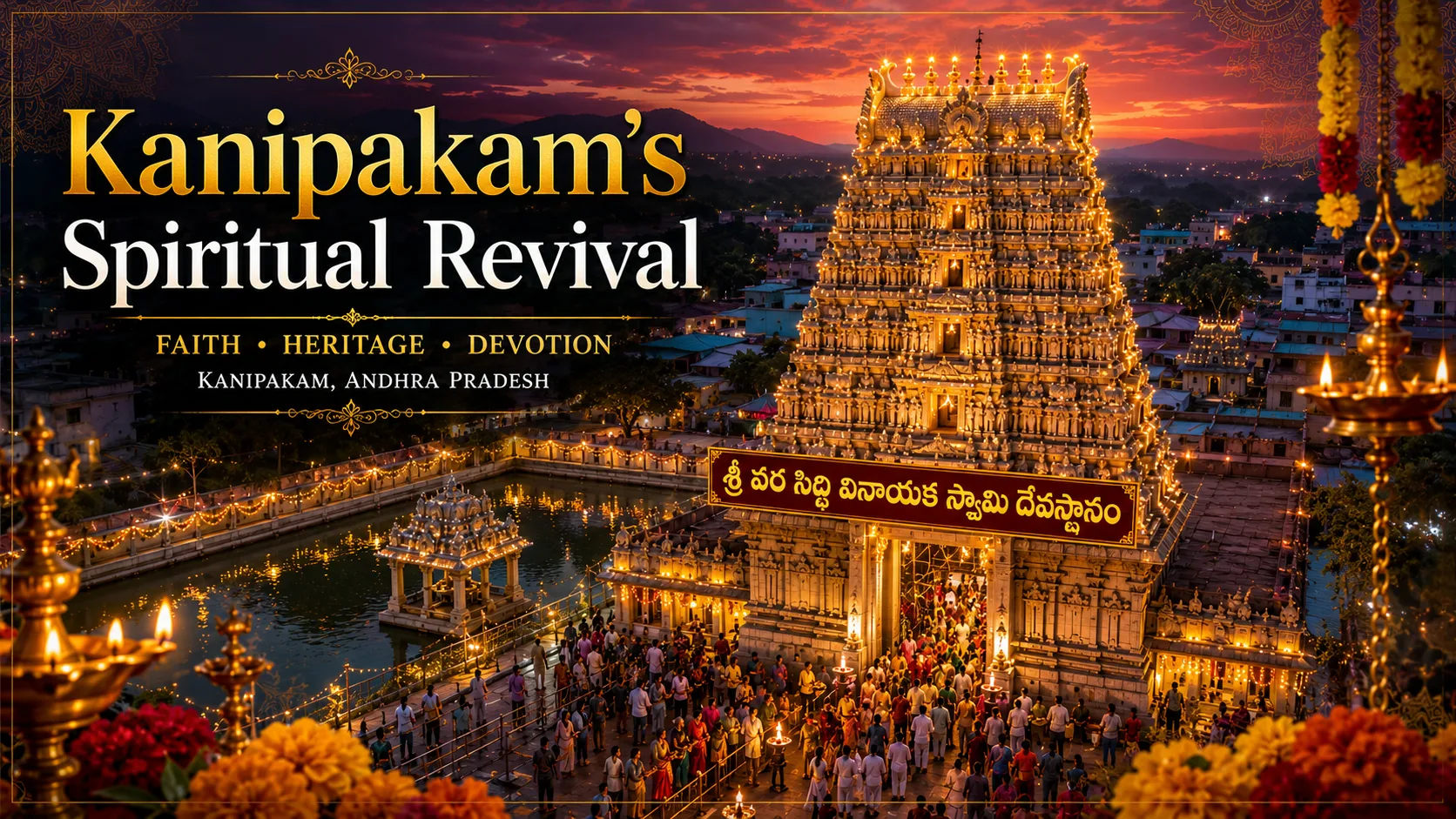
Kanipakam emerges as a major spiritual tourism hub in Andhra Pradesh with rising pilgrim footfall, temple development plans, and renewed cultural focus.
Field Hockey’s New Global Rivalries Shape 2026 Era
Kanipakam: Andhra Pradesh’s Sacred Temple Town Enters a New Era
Nestled in the Chittoor district of Andhra Pradesh, Kanipakam has long remained one of South India’s most spiritually revered destinations. Known primarily for the famous Sri Varasidhi Vinayaka Swamy Temple, the temple town is once again drawing attention as religious tourism, temple modernization, and regional infrastructure growth reshape the pilgrim experience in 2026.
Over the past few months, Kanipakam has witnessed increasing national visibility due to renewed discussions around temple development, enhanced pilgrim amenities, and Andhra Pradesh’s broader push to strengthen spiritual tourism circuits. The town, once considered a quiet devotional destination near Chittoor, is now being viewed as a strategic cultural and tourism asset in southern India.
The growing attention toward Kanipakam reflects a wider trend across India where heritage temples are becoming centers of economic activity, regional identity, and spiritual tourism investment.
Why Kanipakam Holds Deep Religious Importance
The Sri Varasidhi Vinayaka Swamy Temple is among the most important Lord Ganesha temples in India. According to temple legend, the deity is self-manifested, or “Swayambhu,” emerging from a well where the idol continues to remain partially submerged in water even today. The temple’s mythology, architecture, and spiritual significance attract lakhs of devotees every year.
What makes Kanipakam especially unique is the enduring belief among devotees that the idol gradually increases in size over time. Temple history states that even older ceremonial armor no longer fits the deity, reinforcing the sacred mystique surrounding the temple.
The temple’s origins date back to the Chola period and were later expanded during the Vijayanagara Empire, making it not only a religious site but also a historical monument reflecting South India’s temple architecture traditions.
Rising Pilgrim Footfall Changes the Local Economy
Kanipakam’s recent surge in pilgrim traffic is creating ripple effects across the local economy. Hotels, transport operators, restaurants, flower vendors, and religious goods sellers have all reported increased activity during festive periods and weekends.
Officials and tourism observers believe the temple’s accessibility from Tirupati and Bengaluru has contributed significantly to this growth. As more travelers combine Tirupati visits with Kanipakam pilgrimages, the town is becoming part of a broader Andhra Pradesh devotional tourism corridor.
Local businesses are also adapting to changing visitor expectations. Digital booking systems, queue management initiatives, accommodation upgrades, and road connectivity improvements are increasingly becoming central discussions around Kanipakam’s future development.
Temple Infrastructure and Tourism Expansion
The Andhra Pradesh government and temple administration have repeatedly emphasized the importance of developing temple towns with better civic infrastructure, crowd management systems, and tourism facilities. Kanipakam has emerged as one of the important centers within this broader strategy.
Experts tracking temple tourism trends note that spiritual destinations are no longer viewed purely through a religious lens. Instead, they are now integrated into regional economic planning, heritage conservation, and tourism branding.
Kanipakam’s future growth may depend heavily on how effectively authorities balance modernization with preservation of the temple’s sacred atmosphere and historic identity.
Cultural Identity Beyond Religion
Kanipakam is not just a pilgrimage destination; it also represents a living continuation of Andhra Pradesh’s temple culture. Annual Brahmotsavam celebrations and Vinayaka Chavithi festivities continue to attract devotees from Telugu-speaking states as well as neighboring Tamil Nadu and Karnataka.
The temple’s rituals, architecture, and oral legends have become deeply intertwined with regional identity. For many devotees, Kanipakam symbolizes faith, justice, and spiritual cleansing. Traditional belief holds that devotees visiting the temple with honesty and devotion receive divine blessings and resolution to personal struggles.
This emotional and cultural connection explains why Kanipakam remains relevant even in an era dominated by digital spirituality and urban religious experiences.
Why Kanipakam Is Becoming a National Religious Tourism Story
India’s spiritual tourism economy is rapidly expanding, and destinations like Kanipakam are increasingly benefiting from this transformation. Religious tourism now influences hospitality, transport, infrastructure, and regional branding across several Indian states.
Kanipakam’s rise aligns with this national movement. Its combination of mythology, historical legacy, accessibility, and devotional significance positions it as one of Andhra Pradesh’s most important temple destinations after Tirupati.
Travel analysts also point out that smaller temple towns are becoming attractive alternatives for pilgrims seeking calmer, more immersive spiritual experiences compared to highly commercialized destinations.
As infrastructure improves and tourism campaigns intensify, Kanipakam may soon evolve from a regional pilgrimage center into a nationally recognized spiritual tourism landmark.
Kanipakam
Kanipakam is located around 11 kilometers from Chittoor city in Andhra Pradesh and approximately 70 kilometers from Tirupati. The town is globally recognized for the Sri Varasidhi Vinayaka Swamy Temple dedicated to Lord Ganesha. Historical records connect the temple to the Chola dynasty, while later expansions occurred during Vijayanagara rule. The temple’s self-manifested idol and sacred water-filled sanctum remain central to its spiritual identity.
Disclaimer: This article is intended for informational and cultural purposes only. Temple-related developments, tourism updates, administrative decisions, and event schedules associated with Kanipakam may change based on official announcements from temple authorities and the Government of Andhra Pradesh. Readers are advised to verify pilgrimage timings, rituals, accommodation availability, and travel information through official sources before planning a visit. The feature image used in this article is a creative conceptual illustration designed for editorial representation and may not depict the exact real-world appearance of the temple premises or surroundings.
West Indies vs India: Gill Powers Historic ODI Chase

West Indies vs India saw Shubman Gill smash 223 as India chased 406 to win the second ODI by eight wickets and seal the series 2-0 in Guwahati. Caribbean Premier League 2026: Falcons Make History West Indies vs India: Gill Leads Historic Run Chase The West Indies vs India ODI series took another dramatic turn…
Caribbean Premier League 2026: Falcons Make History
Caribbean Premier League 2026 ends with Antigua & Barbuda Falcons winning their maiden title after beating Jamaica Kingsmen by eight wickets in Barbados. Japan vs India T20I: Historic Clash Set for Sano Caribbean Premier League 2026: A Historic Finish The Caribbean Premier League has wrapped up another memorable season, and the 2026 edition has produced…
Japan vs India T20I: Historic Clash Set for Sano
Japan vs India T20I on September 22, 2026, marks their first men’s international meeting as Shreyas Iyer leads India in a historic Sano clash. 2026 Formula One World Championship: Title Race Heats Up Now The cricket world is set for a meeting that would have sounded unusual a few years ago. Japan vs India T20I…









Join Us on Social Media!
Stay updated with the latest from EasyBuzz. Connect with us: