
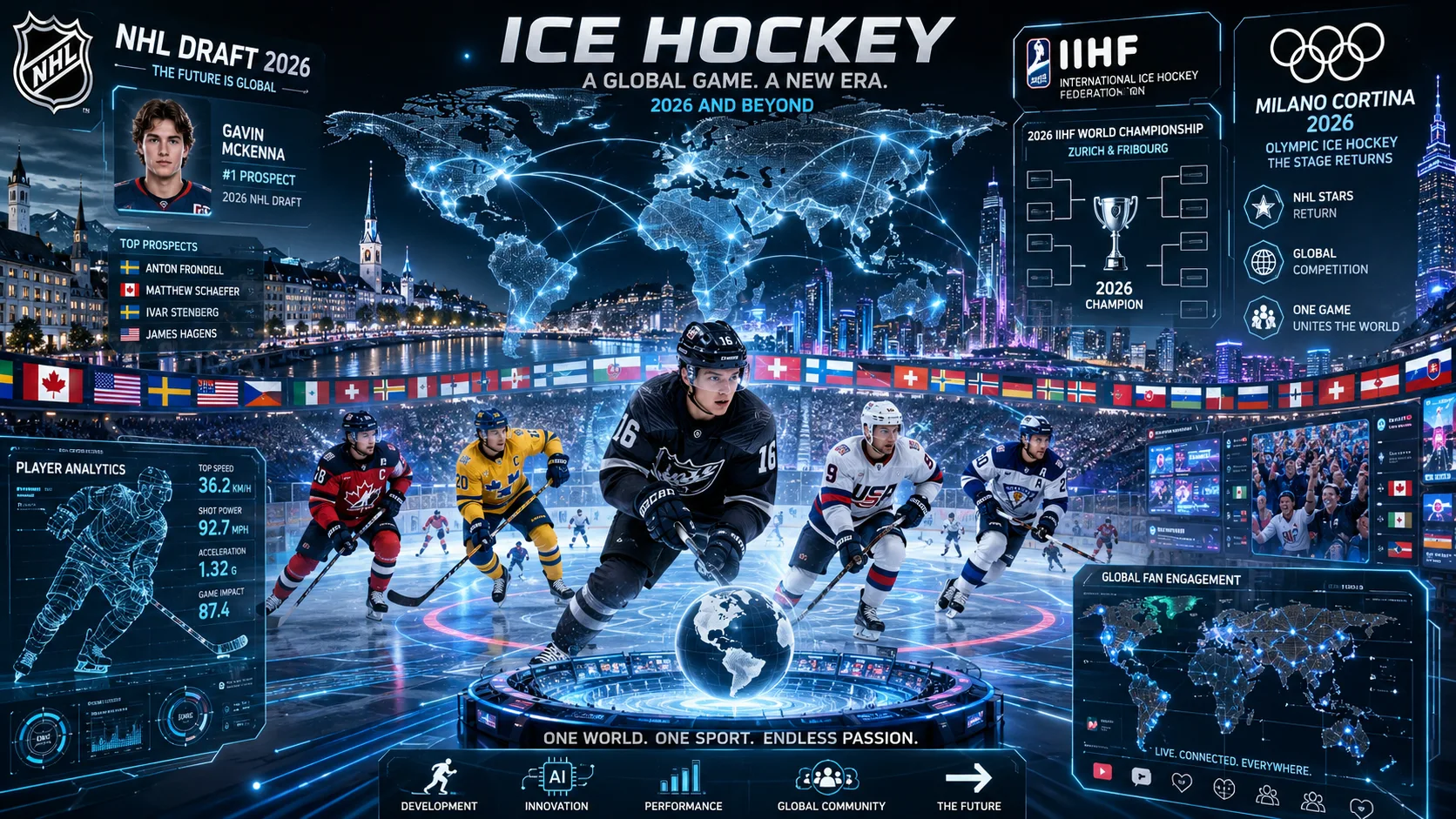
Ice Hockey enters a transformative 2026 season with Olympic shifts, rising NHL prospects, and IIHF expansion redefining the sport globally.
Mittapalem Narayanaswami Temple Draws Huge Crowds
Ice Hockey Enters a New Global Power Cycle
The world of National Hockey League and international Ice Hockey is moving through one of its most transitional periods in years. As the 2026 IIHF World Championship approaches in Switzerland and Olympic attention intensifies around Milano Cortina 2026, the sport is witnessing a rare convergence of elite prospects, evolving international competition, and strategic league expansion.
The latest developments across Ice Hockey reveal a sport preparing for a broader global audience while simultaneously recalibrating its competitive identity. From rising teenage superstars to Olympic rule debates and renewed international rivalries, 2026 may become a defining year for the modern era of Ice Hockey.
The Gavin McKenna Decision Signals a New NHL Era
One of the biggest stories currently dominating Ice Hockey conversations is the decision by projected 2026 NHL Draft first overall pick Gavin McKenna to skip the IIHF World Championship in favor of NHL Draft Combine preparation.
The move reflects how elite young prospects are increasingly prioritizing long-term NHL development over short-term international exposure. McKenna’s choice also highlights how the NHL Draft ecosystem has become more demanding, commercialized, and strategically managed than ever before.
The decision generated debate throughout the hockey world because representing Canada at the World Championship has traditionally been considered a major honor. Yet modern player management has shifted dramatically. Training optimization, injury prevention, sports science, and draft positioning now influence career planning more aggressively than in previous generations.
This evolving mentality is reshaping how young athletes approach Ice Hockey careers globally.
The 2026 IIHF World Championship Is Becoming a Major Turning Point
The 2026 IIHF World Championship in Zurich and Fribourg is attracting unusual attention compared to previous editions. The tournament arrives during a period where international hockey is regaining momentum after years of fragmented scheduling and inconsistent NHL participation.
Several NHL organizations are already sending high-profile players and prospects to represent their national teams. Sweden, Finland, Czechia, Canada, and the United States are building increasingly competitive rosters, creating expectations for one of the strongest tournaments in recent memory.
Sweden in particular enters the championship under pressure. After consecutive podium finishes but continued semifinal disappointments, expectations around their current generation have intensified. Young talent such as Anton Frondell and Ivar Stenberg could become central figures in the next wave of European hockey dominance.
Meanwhile, Team USA is attempting to build continuity after recent international success. USA Hockey’s preparations suggest a growing confidence in the American development pipeline, which continues to challenge Canada’s long-standing influence over the sport.
Olympic Ice Hockey Is Returning to the Spotlight
Another major factor driving Ice Hockey’s global relevance is the continued buildup toward the 2026 Winter Olympics in Milano Cortina.
Olympic hockey has regained significance because NHL stars are once again participating, creating renewed anticipation among fans and broadcasters worldwide. However, ongoing discussions around rule differences between Olympic hockey and NHL hockey remain a central issue.
International Ice Hockey Federation rules differ substantially from NHL standards in areas including rink dimensions, overtime procedures, shootout structures, and physical enforcement standards such as fighting penalties. These differences create unique tactical environments that often favor speed, transition play, and technical discipline over pure physicality.
The IIHF has also faced scrutiny over rink design controversies connected to Olympic venues. Discussions surrounding ice surface dimensions and gameplay balance have become increasingly important as leagues worldwide attempt to standardize aspects of elite competition.
For Ice Hockey executives, the Olympics represent more than a tournament. They are a global growth opportunity capable of expanding the sport into newer commercial markets.
Young Defenders Are Changing the NHL Talent Model
Another emerging trend in Ice Hockey is the growing prominence of elite young defensemen entering the NHL earlier and contributing immediately.
Matthew Schaefer’s historic rookie campaign with the New York Islanders has become one of the clearest examples of this evolution. His offensive production and rapid adjustment to NHL speed reflect broader developmental changes occurring across junior hockey systems.
Modern defensemen are increasingly expected to operate as transition quarterbacks, offensive creators, and high-speed puck movers rather than purely defensive specialists. NHL franchises are now prioritizing skating mechanics, puck possession metrics, and offensive zone activation when evaluating prospects.
This shift is influencing coaching systems across youth hockey globally, especially in Canada, Sweden, Finland, and the United States.
Women’s Ice Hockey Continues Expanding Internationally
Women’s Ice Hockey is also entering a significant growth phase.
The 2026 IIHF Women’s World Championship in Denmark represents another important step in expanding elite women’s tournaments into broader European markets. The IIHF’s scheduling adjustments and increased promotional efforts indicate stronger institutional investment in the women’s game.
Olympic women’s hockey has similarly gained stronger visibility, with athletes such as Marie-Philip Poulin and Caroline Harvey continuing to elevate international attention around the sport.
Commercial interest, streaming accessibility, and growing youth participation are contributing to sustained momentum that could redefine the women’s side of Ice Hockey over the next decade.
Ice Hockey’s Globalization Strategy Is Accelerating
Beyond the NHL and traditional powerhouse nations, the IIHF continues expanding tournament structures into emerging hockey regions.
The organization’s lower-division tournaments now include nations across Asia, Eastern Europe, Africa, and the Middle East. While some tournaments have faced geopolitical complications and scheduling disruptions, the long-term strategy remains clear: expand Ice Hockey’s international footprint aggressively.
This globalization strategy mirrors trends previously seen in football and basketball, where governing bodies increasingly prioritize emerging markets for long-term audience growth.
Digital engagement tools such as IIHF Fantasy Hockey, enhanced streaming platforms, and multilingual international coverage are also helping modernize the fan experience.
Why 2026 Could Define the Future of Ice Hockey
Ice Hockey is no longer operating inside a purely North American framework. The sport is evolving into a globally interconnected ecosystem where NHL development, Olympic competition, international federation politics, and digital fan engagement now overlap continuously.
The rise of elite young talent, the return of Olympic relevance, and the growing competitiveness of international tournaments are collectively reshaping the sport’s trajectory.
For fans, analysts, and organizations alike, 2026 may ultimately be remembered as the year Ice Hockey entered its next modern era.
Disclaimer: This article is intended for informational, editorial, and analytical purposes only. Ice Hockey league names, tournament references, team identities, logos, and athlete mentions remain the property of their respective organizations, including the NHL, IIHF, IOC, and affiliated entities. The feature image concept and visual representation are creative interpretations designed for journalistic and digital media use. No official endorsement, sponsorship, or partnership is implied.
Caribbean Premier League 2026: Falcons Make History

Caribbean Premier League 2026 ends with Antigua & Barbuda Falcons winning their maiden title after beating Jamaica Kingsmen by eight wickets in Barbados. Japan vs India T20I: Historic Clash Set for Sano Caribbean Premier League 2026: A Historic Finish The Caribbean Premier League has wrapped up another memorable season, and the 2026 edition has produced…
Japan vs India T20I: Historic Clash Set for Sano
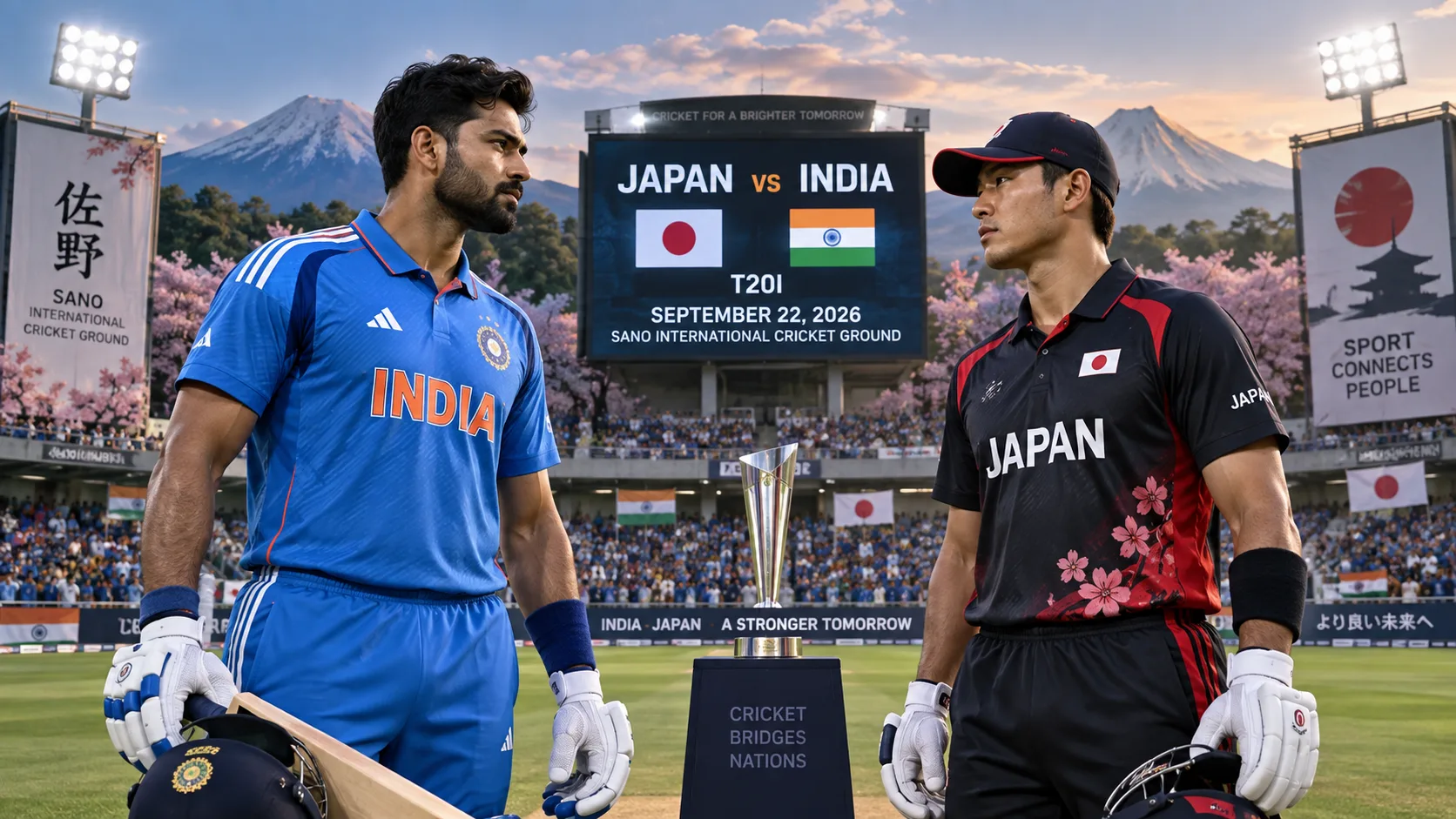
Japan vs India T20I on September 22, 2026, marks their first men’s international meeting as Shreyas Iyer leads India in a historic Sano clash. 2026 Formula One World Championship: Title Race Heats Up Now The cricket world is set for a meeting that would have sounded unusual a few years ago. Japan vs India T20I…
2026 Formula One World Championship: Title Race Heats Up Now
The 2026 Formula One World Championship enters a crucial phase after Madrid, with Kimi Antonelli leading. See standings, latest news, next race and key battles. Bikkavolu Subrahmanya Temple: Why It Still Draws Devotees The 2026 Formula One World Championship has entered one of its most important phases, with the season moving beyond the halfway mark…









Join Us on Social Media!
Stay updated with the latest from EasyBuzz. Connect with us: