
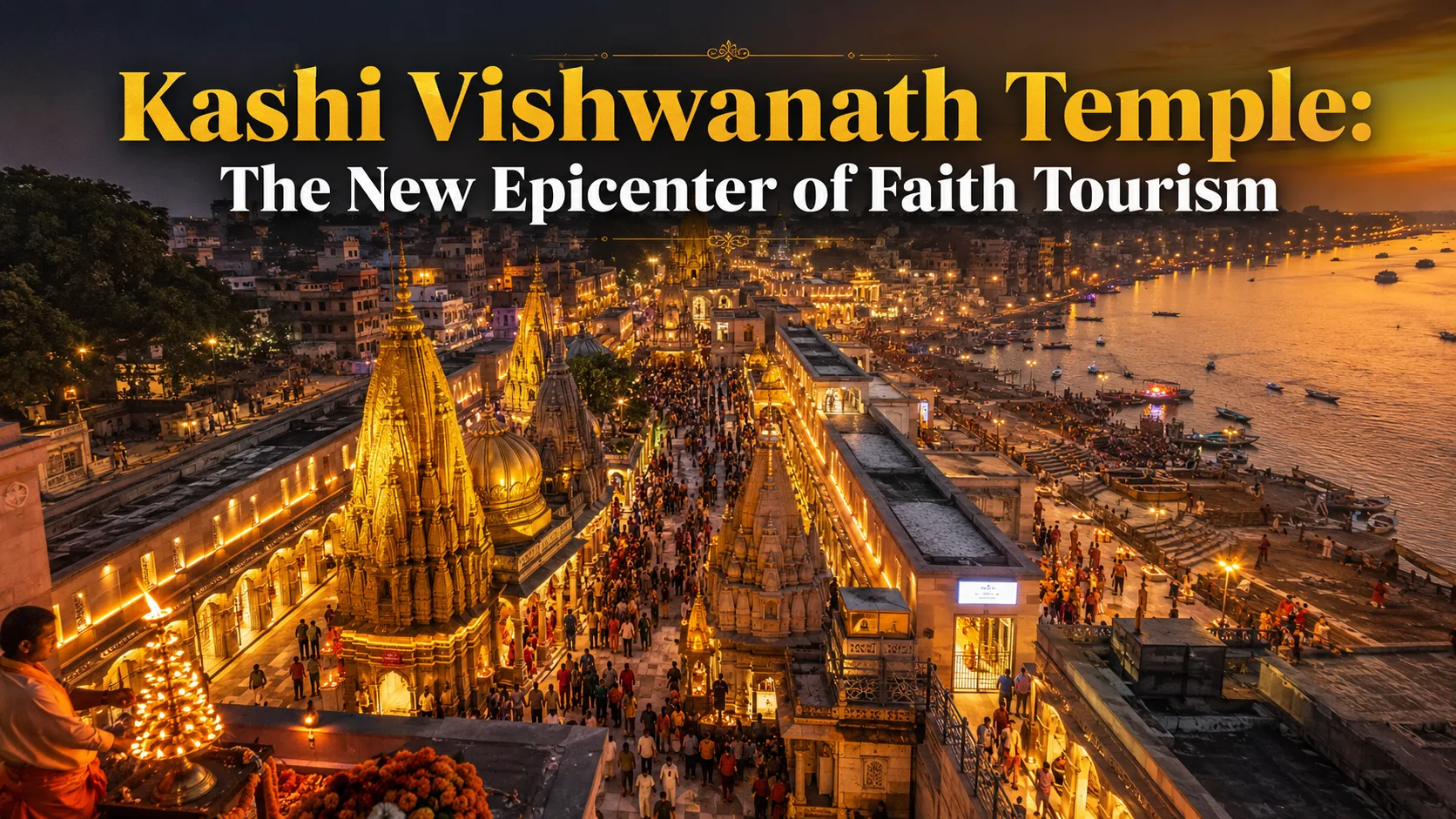
Kashi Vishwanath Temple records massive visitor growth as faith tourism transforms Varanasi through infrastructure, crowd management, and corridor expansion.
Guwahati Temple in Focus as Kamakhya Corridor Gains Momentum
Kashi Vishwanath Temple Emerges as the Center of India’s Religious Tourism Boom
The Kashi Vishwanath Temple in Varanasi is once again at the center of national attention as India’s religious tourism sector experiences unprecedented growth. New visitor records, expanding pilgrimage infrastructure, and advanced crowd-management systems are transforming the ancient temple into one of the country’s most influential spiritual destinations.
Recent reports indicate that the impact of the Kashi Vishwanath Corridor continues to accelerate tourism, local economic activity, and large-scale pilgrimage movement across Uttar Pradesh. The temple’s growing prominence is also becoming a model for other religious cities planning modernization projects while preserving cultural heritage.
A Historic Temple Driving Modern Tourism Growth
The Kashi Vishwanath Temple, one of Hinduism’s twelve sacred Jyotirlingas, has stood for centuries as one of the most revered shrines dedicated to Lord Shiva. Located in the heart of Varanasi, the temple has long attracted devotees from across India and abroad.
However, the transformation witnessed over the past few years has been unlike anything seen in modern history. The inauguration of the Kashi Vishwanath Corridor created direct connectivity between the temple complex and the banks of the River Ganga, dramatically improving accessibility for pilgrims.
Government data and tourism reports suggest that the redevelopment project has significantly expanded the temple precinct while restoring dozens of ancient shrines that were previously hidden within densely populated lanes. The project has also introduced visitor amenities, wider pathways, museums, sanitation facilities, and improved security infrastructure.
Record Pilgrim Numbers Continue to Rise
One of the biggest developments surrounding the Kashi Vishwanath Temple is the extraordinary rise in visitor footfall.
Recent tourism assessments indicate that Varanasi has become one of India’s fastest-growing spiritual destinations. Reports highlight that millions of devotees continue to arrive every month, with faith-based tourism increasingly contributing to the state’s economy.
Industry observers note that the success of the Kashi Vishwanath Corridor has encouraged pilgrims visiting Prayagraj, Ayodhya, and Mathura to include Varanasi in their travel itineraries, creating a larger religious tourism circuit across Uttar Pradesh.
The growing influx has benefited hotels, local businesses, transport operators, artisans, and cultural tourism initiatives throughout the city.
Advanced Crowd Management Becoming a National Model
As visitor numbers continue to climb, authorities have focused heavily on crowd-control mechanisms around the temple complex.
Recent administrative reviews highlighted how the Kashi Vishwanath Temple’s management system is being studied as a model for handling large-scale religious gatherings. Officials have examined mobile-app-based token systems, real-time CCTV monitoring, zone-wise crowd movement planning, darshan management, and security protocols developed around the temple corridor.
These measures have gained attention beyond Uttar Pradesh, with planners from other pilgrimage cities evaluating similar systems for future implementation.
The emphasis on technology-driven crowd management reflects a broader shift in how India’s major religious destinations are preparing for record pilgrimage volumes.
Expansion of the Spiritual Ecosystem Around Kashi
The success of the Kashi Vishwanath Temple has triggered broader urban and spiritual development initiatives across Varanasi.
Several new projects are being discussed or developed around the city, including temple-focused tourism infrastructure, cultural corridors, heritage restoration efforts, riverfront improvements, and enhanced transportation connectivity.
Local redevelopment activity around key pilgrimage zones is also continuing as authorities seek to improve access, reduce congestion, and support future growth in visitor numbers. Emerging proposals connected to spiritual tourism indicate that Varanasi’s transformation is still evolving.
Why Kashi Vishwanath Temple Matters Beyond Religion
The significance of the Kashi Vishwanath Temple today extends far beyond its religious importance.
The temple has become a case study in heritage-led urban regeneration. Policymakers, tourism experts, and cultural planners increasingly view Kashi as an example of how historic sacred spaces can be modernized without losing their spiritual identity.
The project’s influence is visible across India, where several temple-town redevelopment plans have drawn inspiration from the Kashi model. Improved pilgrim access, heritage preservation, tourism expansion, and economic growth are now frequently linked to the success of the Varanasi transformation.
The Road Ahead
The future of the Kashi Vishwanath Temple appears closely tied to India’s expanding faith-tourism economy. With rising visitor numbers, enhanced infrastructure, and growing international visibility, the temple is expected to remain one of the country’s most influential pilgrimage destinations.
As authorities continue refining crowd-management systems and urban development strategies, Varanasi is positioning itself not only as an ancient spiritual capital but also as a modern global center for religious tourism.
The ongoing evolution of the Kashi Vishwanath Temple demonstrates how tradition and modernization can coexist, creating a destination that serves both faith and the future.
Kashi Vishwanath Temple
The Kashi Vishwanath Temple is located in Varanasi, Uttar Pradesh, and is dedicated to Lord Shiva. It is one of the twelve Jyotirlingas and among the most sacred pilgrimage sites in Hinduism. The current temple structure was rebuilt by Maharani Ahilyabai Holkar in 1780. In December 2021, the Kashi Vishwanath Corridor was inaugurated, creating direct connectivity between the temple complex and the Ganga River while significantly expanding the pilgrim area and restoring historic temples. The redevelopment has since become one of India’s most discussed religious infrastructure projects.
Disclaimer: This feature image is a conceptual editorial illustration created for news, analysis, and informational purposes. It is intended to represent the significance of the Kashi Vishwanath Temple, faith tourism growth, and the spiritual landscape of Varanasi. Visual elements, lighting effects, crowd density, and aerial perspectives may be artistically enhanced and should not be interpreted as an exact real-time depiction of the temple complex or surrounding areas. The image is designed solely for illustrative and publication use.
Liverpool vs Man City: City Win 3-0 at Anfield in Style Now
Liverpool vs Man City ends 3-0 at Anfield as Haaland, Doku and Cherki score to keep Manchester City top of the Premier League table this season. Shakti Peethas in 2026: Latest News and Sacred Sites – easybuzz.in Liverpool vs Man City: City Deliver a Statement Victory Manchester City produced an impressive second-half display to beat…
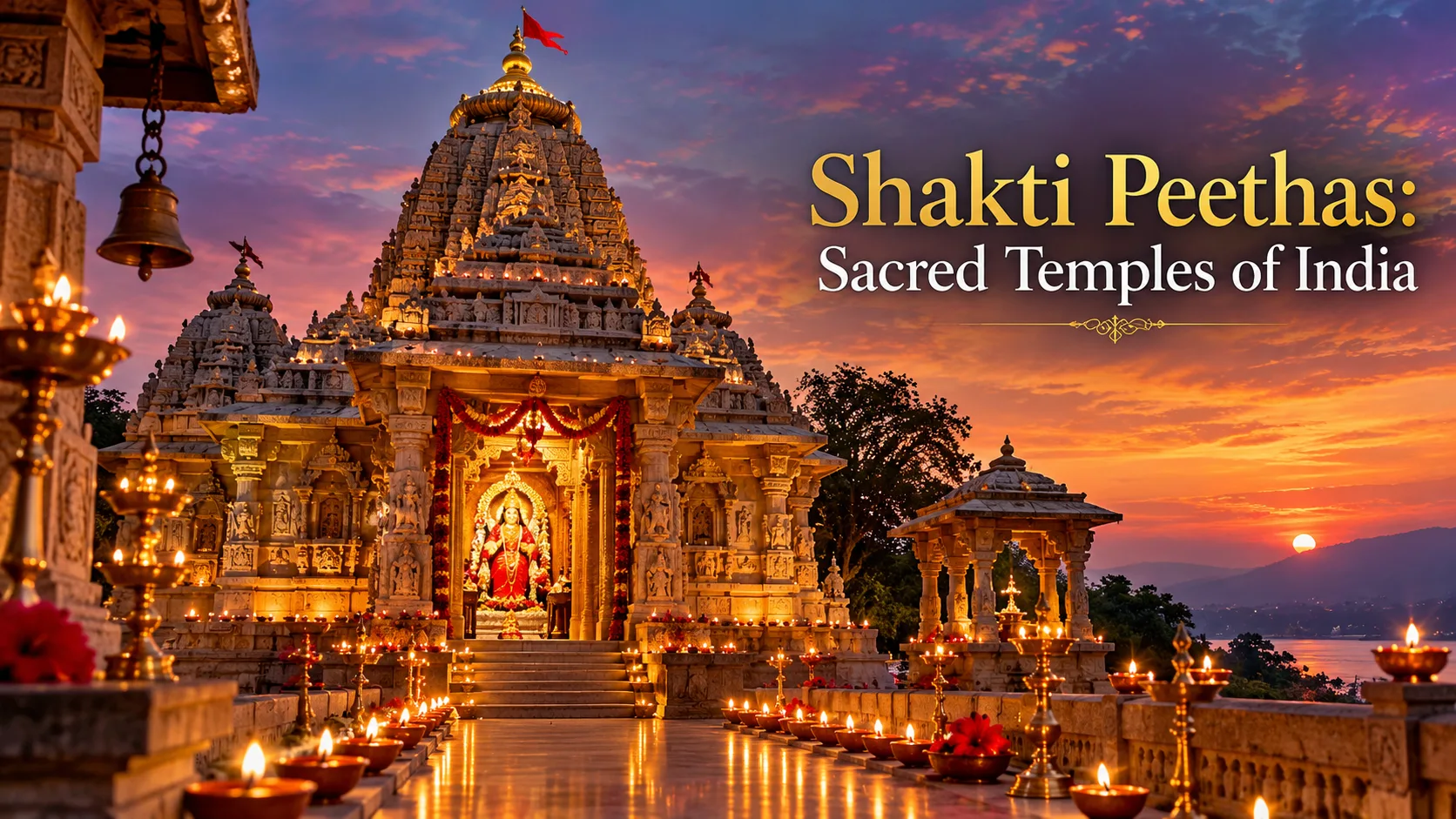
Shakti Peethas in 2026: Latest News and Sacred Sites

Explore the latest Shakti Peethas news in 2026, sacred temples, Hindu mythology, Navratri rituals, pilgrimage updates and travel tips for devotees. West Indies vs India: Gill Powers Historic ODI Chase Shakti Peethas in 2026: Latest News, Rituals and Sacred Sites The latest developments surrounding Shakti Peethas highlight the continuing importance of India’s sacred goddess temples,…
West Indies vs India: Gill Powers Historic ODI Chase
West Indies vs India saw Shubman Gill smash 223 as India chased 406 to win the second ODI by eight wickets and seal the series 2-0 in Guwahati. Caribbean Premier League 2026: Falcons Make History West Indies vs India: Gill Leads Historic Run Chase The West Indies vs India ODI series took another dramatic turn…







Join Us on Social Media!
Stay updated with the latest from EasyBuzz. Connect with us: