
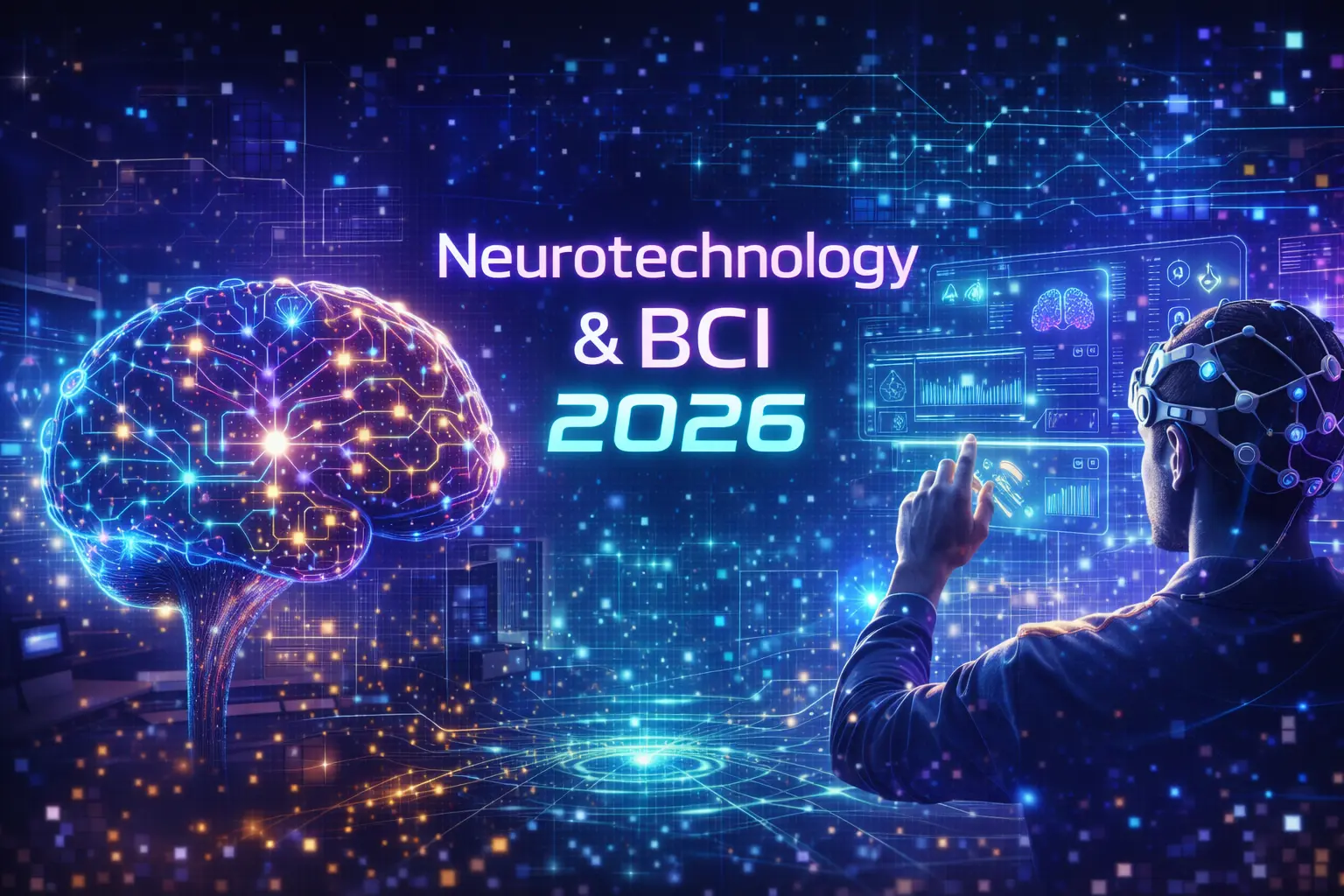
Neurotechnology & Brain-Computer Interfaces (BCI) revolutionizing healthcare and human-machine interaction. Latest breakthroughs, trends, and innovations.
KKR vs RR thriller: Rinku seals comeback win
Latest News Overview
The Neurotechnology & Brain-Computer Interfaces (BCI) sector is witnessing rapid breakthroughs in 2026, moving from experimental labs to real-world applications.
- China approved a world-first commercial brain implant to restore movement in paralysis patients
- Governments are prioritizing BCIs as a strategic future industry, accelerating commercialization timelines
- Companies like Neuralink are planning high-volume production of brain implants in 2026
- New non-invasive systems showcased at CES 2026 aim to bring consumer-friendly brain interfaces to market
Key Trends in Neurotechnology & Brain-Computer Interfaces (BCI)
The industry is transitioning from research to scalable medical and consumer deployment.
1. Clinical Breakthroughs in Healthcare
BCIs are transforming treatment for neurological disorders:
- Restoring movement in paralysis patients
- Enabling communication for ALS and stroke patients
- Emerging therapies for blindness and spinal injuries
Neurotechnology is becoming a life-changing medical solution, not just experimental tech.
Invasive vs Non-Invasive BCI Race
Two major approaches are shaping the market:
- Invasive BCIs: Implanted chips offering high precision (e.g., Neuralink)
- Non-invasive BCIs: Wearable EEG devices prioritizing safety and accessibility
Non-invasive solutions are gaining traction for consumer applications and scalability
AI + Brain Signal Decoding
Artificial intelligence is critical to BCI progress:
- Decoding neural signals into text, speech, or actions
- Improving accuracy and real-time responsiveness
- Enabling adaptive, personalized brain interfaces
New concepts like “neural digital twins” aim to enhance precision and usability
Shift Toward Speech BCIs
A major trend in 2026 is the rise of speech-based BCIs, which convert brain signals directly into language.
- Enables near-natural communication for patients
- Considered more practical than motor-control interfaces
- Accelerating clinical adoption
This marks a shift toward human-centric applications.
Global Competition & Investment
The race for BCI leadership is intensifying:
- China rapidly scaling trials and commercialization
- U.S. startups leading innovation in implantable devices
- Increasing venture capital and government funding
BCIs are now a geopolitical and technological priority sector.
Market Growth & Industry Outlook
- BCI market projected to reach $13.32 billion by 2035
- Strong demand driven by neurological disorders and aging populations
- Rapid growth in both medical and consumer neurotechnology
Neurotechnology & Brain-Computer Interfaces (BCI):
The evolution of Neurotechnology & Brain-Computer Interfaces (BCI) reflects a major scientific leap:
- Early neuroscience → Brain signal research
- Modern BCI → Direct brain-to-device communication
- Future vision → Seamless human-AI integration
BCIs work by translating neural activity into digital signals, enabling direct interaction with computers and machines
Expert Analysis
The future of Neurotechnology & Brain-Computer Interfaces (BCI) lies in scalability, safety, and usability.
Strengths
- Potential to cure or manage neurological disorders
- Direct human-machine interaction
- Expanding AI-driven capabilities
Challenges
- Ethical concerns (privacy of neural data)
- High cost and surgical risks (for implants)
- Regulatory and adoption barriers
Verdict: BCI is evolving into a transformational platform bridging biology and computing.
The neurotechnology & brain-computer interfaces (BCI) revolution is redefining how humans interact with technology. From restoring mobility to enabling thought-based communication, the field is moving rapidly toward a future where the brain becomes the ultimate interface.
Disclaimer: This article is for informational and educational purposes only. The information provided about Neurotechnology & brain-computer interfaces (BCI) is based on publicly available research, industry developments, and emerging technologies at the time of writing. Clinical applications, safety standards, regulatory approvals, and technological capabilities may evolve and are subject to change without prior notice. Readers are advised to verify updates through authoritative organizations such as the National Institutes of Health, IEEE Brain Initiative, and recognized medical institutions before making healthcare, research, or investment decisions. This content does not constitute medical, legal, or professional advice.
Liverpool vs Man City: City Win 3-0 at Anfield in Style Now
Liverpool vs Man City ends 3-0 at Anfield as Haaland, Doku and Cherki score to keep Manchester City top of the Premier League table this season. Shakti Peethas in 2026: Latest News and Sacred Sites – easybuzz.in Liverpool vs Man City: City Deliver a Statement Victory Manchester City produced an impressive second-half display to beat…
Shakti Peethas in 2026: Latest News and Sacred Sites

Explore the latest Shakti Peethas news in 2026, sacred temples, Hindu mythology, Navratri rituals, pilgrimage updates and travel tips for devotees. West Indies vs India: Gill Powers Historic ODI Chase Shakti Peethas in 2026: Latest News, Rituals and Sacred Sites The latest developments surrounding Shakti Peethas highlight the continuing importance of India’s sacred goddess temples,…
West Indies vs India: Gill Powers Historic ODI Chase
West Indies vs India saw Shubman Gill smash 223 as India chased 406 to win the second ODI by eight wickets and seal the series 2-0 in Guwahati. Caribbean Premier League 2026: Falcons Make History West Indies vs India: Gill Leads Historic Run Chase The West Indies vs India ODI series took another dramatic turn…










Join Us on Social Media!
Stay updated with the latest from EasyBuzz. Connect with us: