
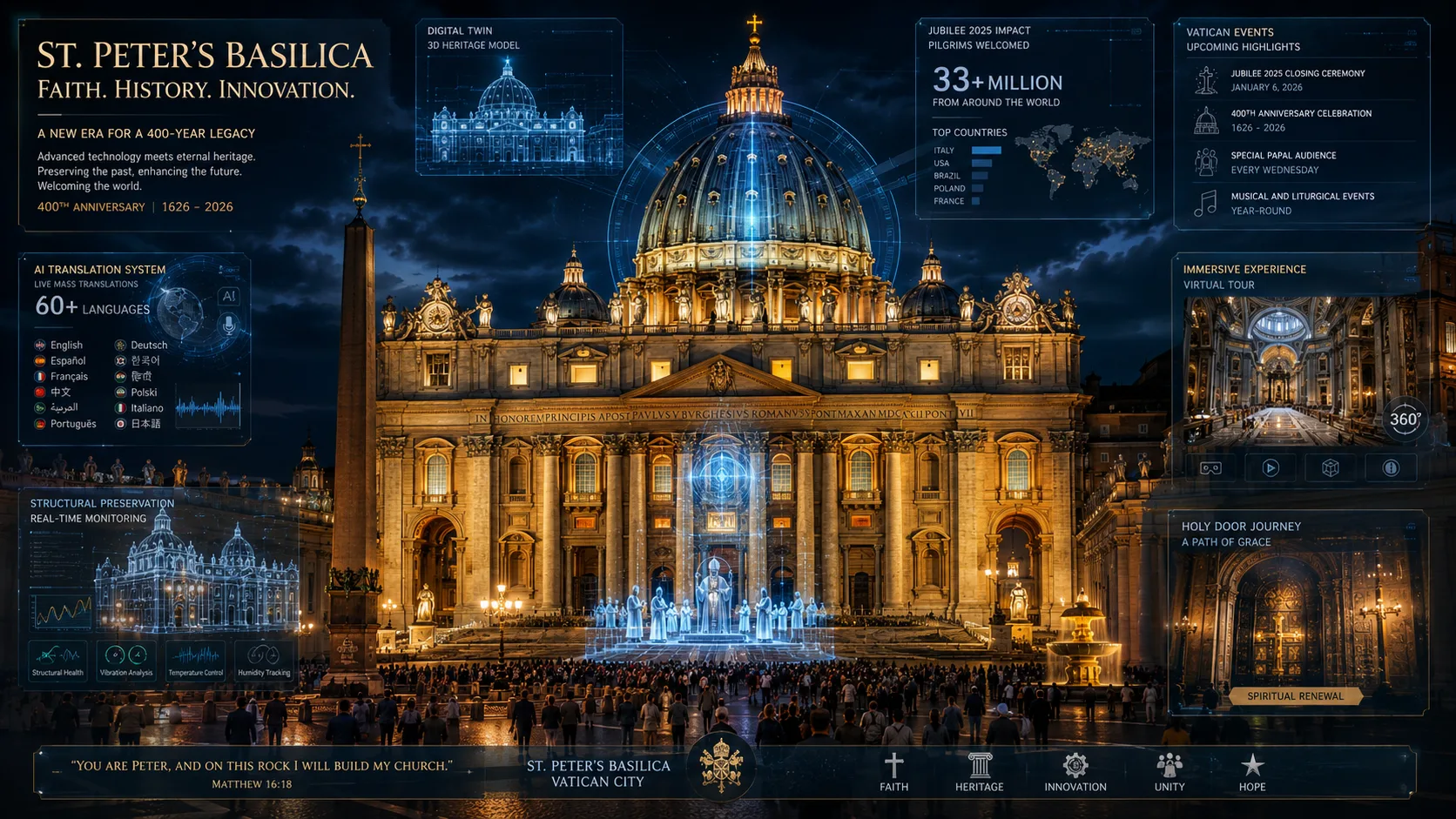
St. Peter’s Basilica enters a transformative era with AI upgrades, Vatican restoration projects, Jubilee tourism growth, and Pope Leo XIV.
Formula 1’s 2026 Chaos Is Rewriting Motorsport Power
For centuries, St. Peter’s Basilica has stood as the spiritual and architectural center of Catholicism. But in 2026, the world’s most famous basilica is undergoing one of the most ambitious transformations in its modern history.
What was once viewed purely as a sacred pilgrimage site is rapidly evolving into a technologically advanced religious and cultural hub shaped by artificial intelligence, digital preservation, immersive tourism, and a renewed Vatican strategy under Pope Leo XIV.
The latest developments surrounding St. Peter’s Basilica reveal a Vatican attempting to balance ancient tradition with modern global accessibility. The shift comes after the enormous success of the 2025 Jubilee Year, which attracted more than 33 million pilgrims to Rome and transformed Vatican tourism into a global logistical operation.
At the center of this transition is the basilica’s upcoming 400th anniversary celebration.
The Vatican recently unveiled major modernization initiatives designed to redefine how visitors experience St. Peter’s Basilica. Among the most significant upgrades are AI-powered live Mass translations in over 60 languages, expanded rooftop and terrace access, advanced crowd-management systems, immersive digital exhibitions, and real-time structural monitoring technologies.
These initiatives mark one of the most technologically ambitious projects ever undertaken inside the Vatican.
According to Vatican officials, the modernization effort is not intended to commercialize the basilica, but rather to protect its historical legacy while making it more accessible to millions of international pilgrims. New “SmartPass” digital systems are expected to improve visitor flow and reduce congestion around major liturgical events.
The transformation also reflects broader changes inside the Catholic Church under Pope Leo XIV.
Since assuming the papacy in 2025, Pope Leo XIV has emphasized a more globally connected and structurally organized Vatican strategy. His leadership style combines ceremonial tradition with cautious modernization, particularly in areas involving technology, diplomacy, and global outreach.
That direction is increasingly visible inside St. Peter’s Basilica itself.
The Vatican’s official platform now promotes immersive virtual tours, digital preservation programs, and educational experiences designed for younger global audiences. One initiative even blends historical storytelling with interactive gaming environments aimed at preserving religious heritage through modern media formats.
Behind the scenes, conservation efforts are accelerating as well.
Recent restoration work on Bernini’s monumental baldachin — the towering bronze canopy above the papal altar — revealed previously hidden artistic details after months of meticulous conservation. The project formed part of a broader Vatican restoration strategy ahead of the Jubilee celebrations and the basilica’s anniversary period.
Architectural preservation has become a growing priority because St. Peter’s Basilica faces mounting pressure from tourism, environmental wear, and aging infrastructure. Experts increasingly view digital mapping, AI-assisted monitoring, and structural scanning as essential tools for preserving fragile heritage sites in the modern era.
The basilica’s evolving role is also reshaping global pilgrimage culture.
For many visitors, St. Peter’s Basilica is no longer simply a destination for religious devotion. It has become a symbolic intersection of faith, politics, art, tourism, diplomacy, and digital culture. Massive papal ceremonies, international peace appeals, Holy Door pilgrimages, and globally televised liturgies continue to reinforce its geopolitical significance.
That visibility intensified after Pope Leo XIV officially closed the Jubilee Holy Door ceremony earlier this year, concluding one of the largest Catholic pilgrimage events in modern history.
The Vatican now appears determined to sustain that momentum.
Officials are expanding visitor engagement through enhanced liturgical programming, sacred music events, multilingual accessibility tools, and previously restricted viewing areas throughout the basilica complex.
Meanwhile, broader debates continue over how much modernization should influence sacred religious spaces.
Some traditionalists worry that digital overlays, AI integration, and technology-driven visitor experiences risk diluting the spiritual atmosphere of St. Peter’s Basilica. Others argue the Vatican has little choice but to adapt to a globally connected era where younger generations increasingly engage with history and religion through immersive digital experiences.
The Vatican’s challenge is therefore both spiritual and strategic.
It must preserve the sacred identity of Christianity’s most iconic church while simultaneously managing millions of tourists, safeguarding priceless artworks, and modernizing infrastructure for the next century.
That balancing act may ultimately define the future of St. Peter’s Basilica more than any single restoration project.
Four hundred years after its consecration, the basilica remains what it has always been: a reflection of the era surrounding it. In 2026, that era happens to be shaped by technology, global media, artificial intelligence, and a rapidly changing Catholic world.
And St. Peter’s Basilica is adapting to all of it.
St. Peter’s Basilica
St. Peter’s Basilica is one of the most important religious and architectural landmarks in the world. Built over the traditional burial site of Saint Peter, the basilica became the spiritual center of the Roman Catholic Church and a masterpiece of Renaissance and Baroque architecture shaped by artists including Michelangelo, Bernini, and Bramante.
Consecrated in 1626, the basilica is approaching its 400th anniversary in 2026. The Vatican is using this milestone to launch major restoration, preservation, accessibility, and digital modernization initiatives while responding to record global pilgrimage traffic following the 2025 Jubilee Year.
Disclaimer: The information, visual concepts, architectural interpretations, and technological representations presented in this article and accompanying imagery are intended solely for editorial, educational, and informational purposes. Any references to Vatican modernization projects, AI systems, restoration initiatives, Jubilee events, papal activities, visitor analytics, or future developments related to St. Peter’s Basilica are based on publicly available reports, ongoing discussions, historical context, and creative journalistic interpretation at the time of publication. This content is not officially affiliated with, endorsed by, or sponsored by the Vatican, the Holy See, St. Peter’s Basilica administration, or any associated religious institution. All trademarks, names, symbols, architectural imagery, and religious references remain the property of their respective owners. Certain visual elements, holographic interfaces, digital overlays, futuristic projections, and AI-inspired concepts depicted in the feature image are artistic visualizations created to illustrate emerging trends in heritage preservation, tourism technology, and digital accessibility within cultural and religious spaces. Event schedules, restoration timelines, visitor statistics, and technological initiatives may evolve or change over time. Readers are encouraged to verify official announcements and updates through Vatican channels and recognized international news organizations. This article does not provide religious guidance, legal advice, financial raecommendations, or official Vatican communication. Any opinions or analysis expressed are those of the author for journalistic commentary purposes only.
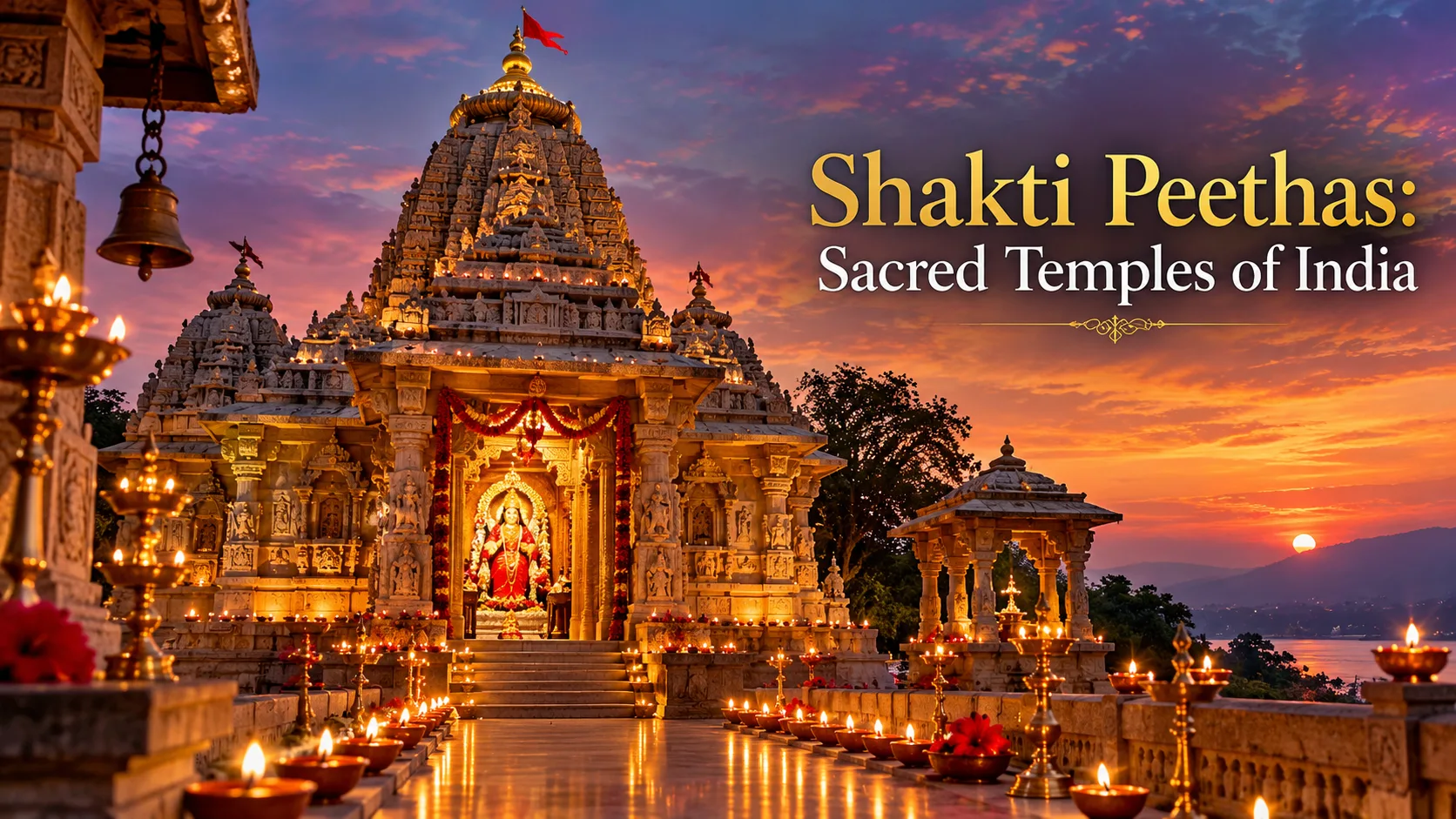
Shakti Peethas in 2026: Latest News and Sacred Sites

Explore the latest Shakti Peethas news in 2026, sacred temples, Hindu mythology, Navratri rituals, pilgrimage updates and travel tips for devotees. West Indies vs India: Gill Powers Historic ODI Chase Shakti Peethas in 2026: Latest News, Rituals and Sacred Sites The latest developments surrounding Shakti Peethas highlight the continuing importance of India’s sacred goddess temples,…
West Indies vs India: Gill Powers Historic ODI Chase
West Indies vs India saw Shubman Gill smash 223 as India chased 406 to win the second ODI by eight wickets and seal the series 2-0 in Guwahati. Caribbean Premier League 2026: Falcons Make History West Indies vs India: Gill Leads Historic Run Chase The West Indies vs India ODI series took another dramatic turn…
Caribbean Premier League 2026: Falcons Make History
Caribbean Premier League 2026 ends with Antigua & Barbuda Falcons winning their maiden title after beating Jamaica Kingsmen by eight wickets in Barbados. Japan vs India T20I: Historic Clash Set for Sano Caribbean Premier League 2026: A Historic Finish The Caribbean Premier League has wrapped up another memorable season, and the 2026 edition has produced…









Join Us on Social Media!
Stay updated with the latest from EasyBuzz. Connect with us: